
Last updated November 2, 2026
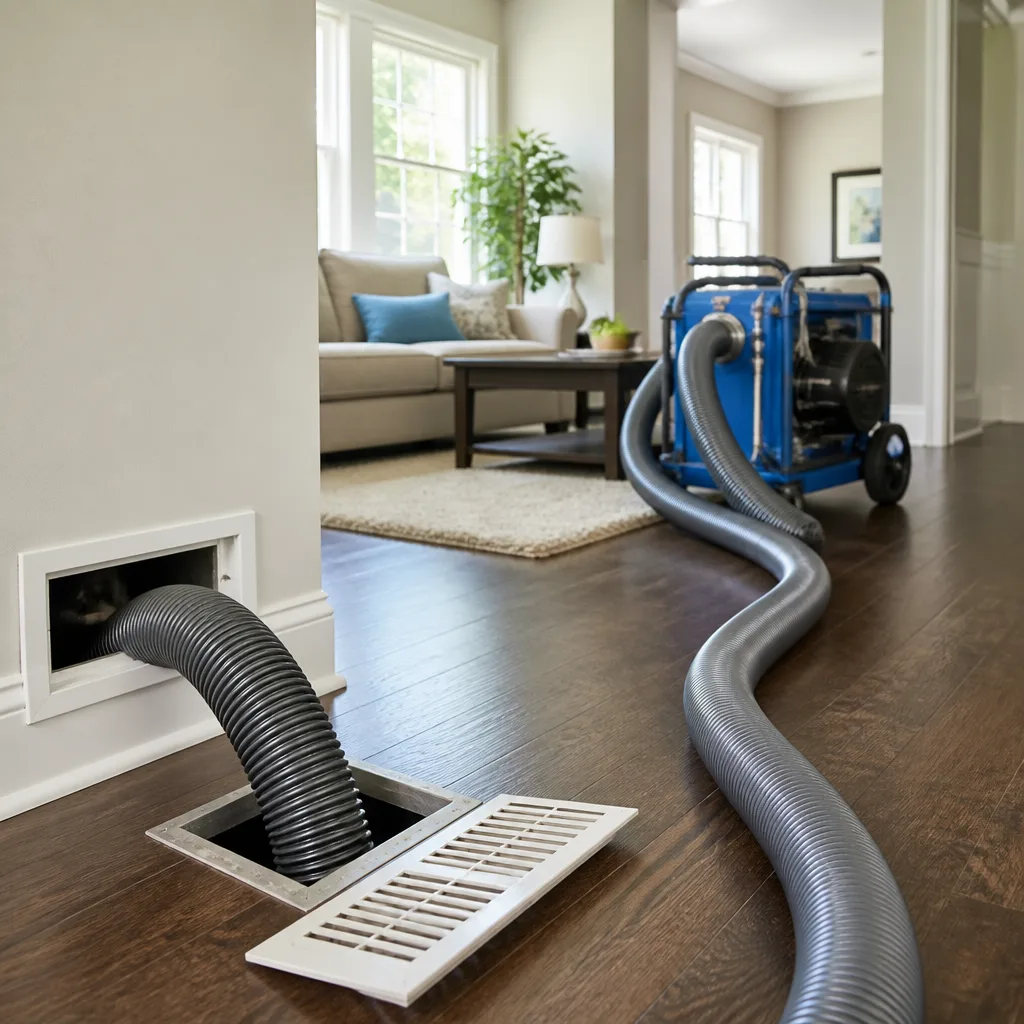 Whole-home duct cleaning
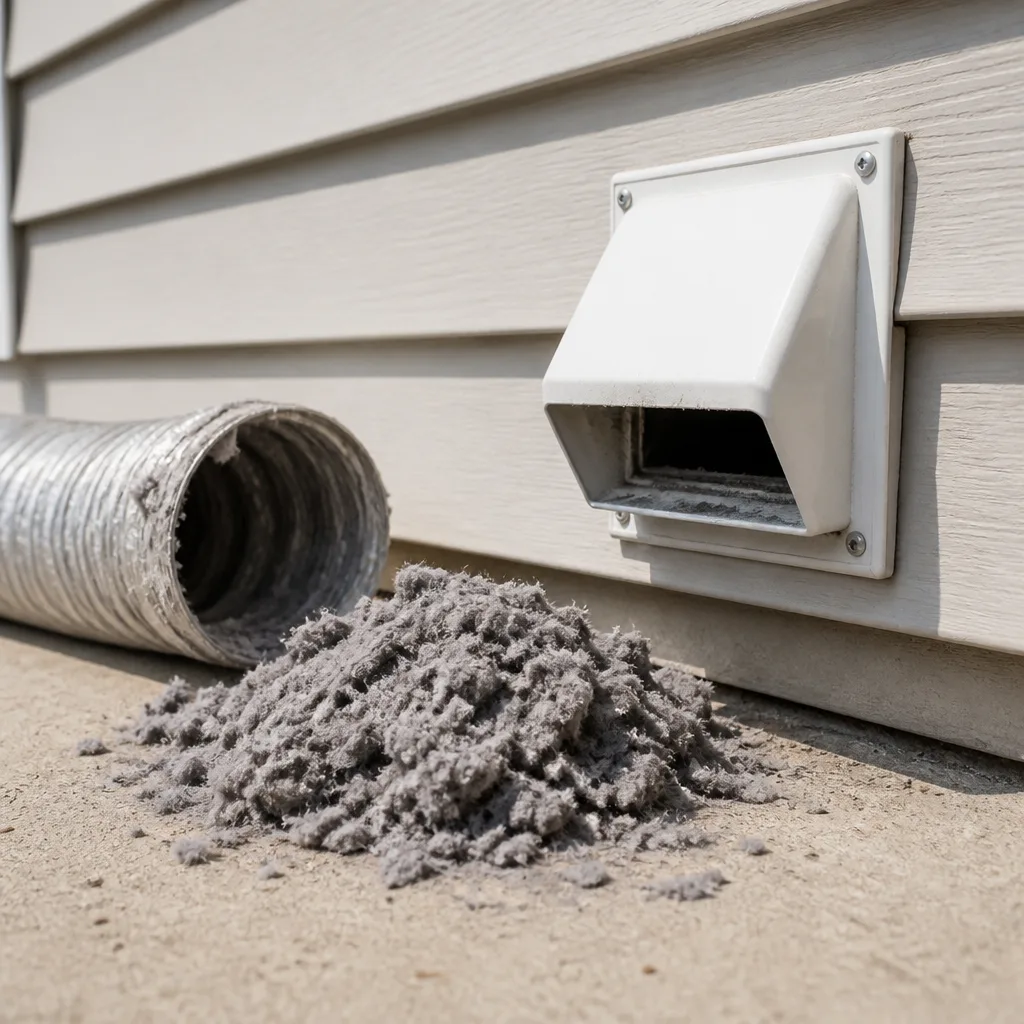 Dryer vent cleaning
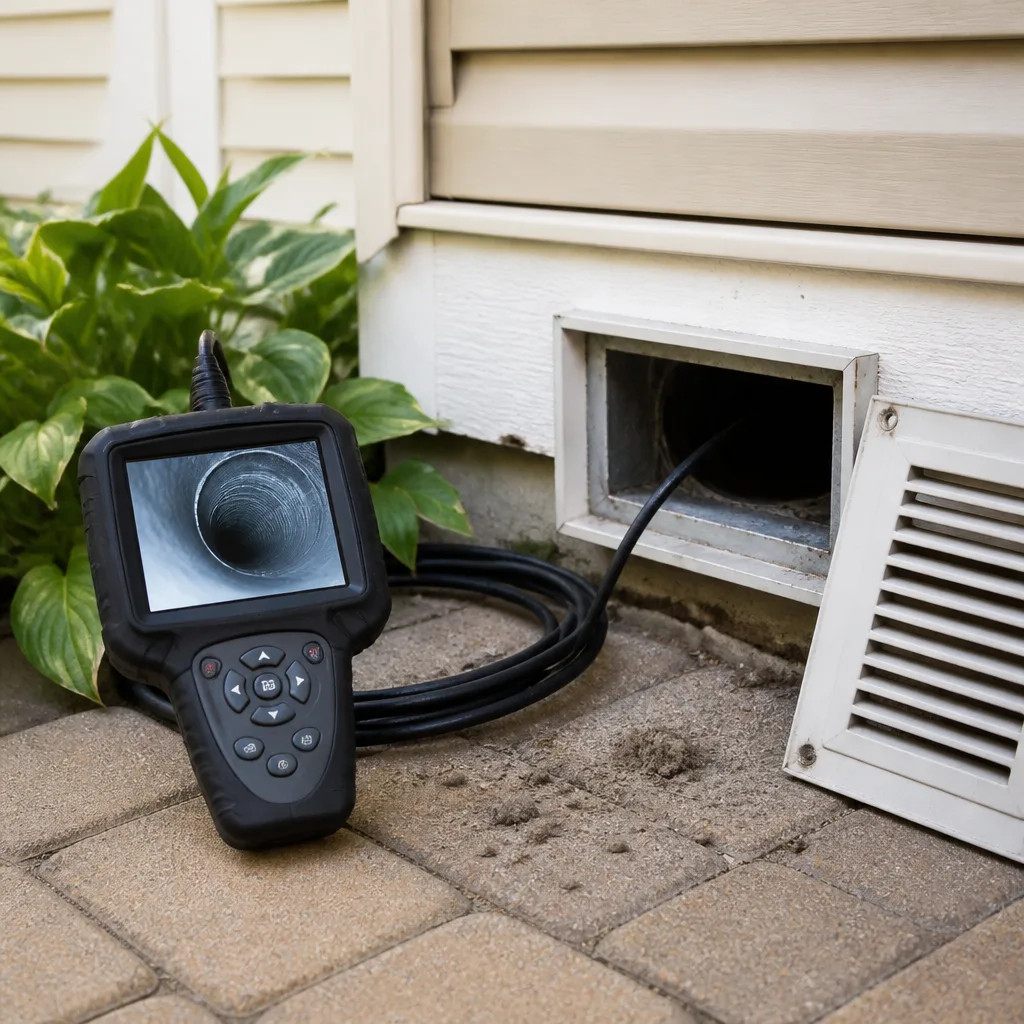 Camera inspection
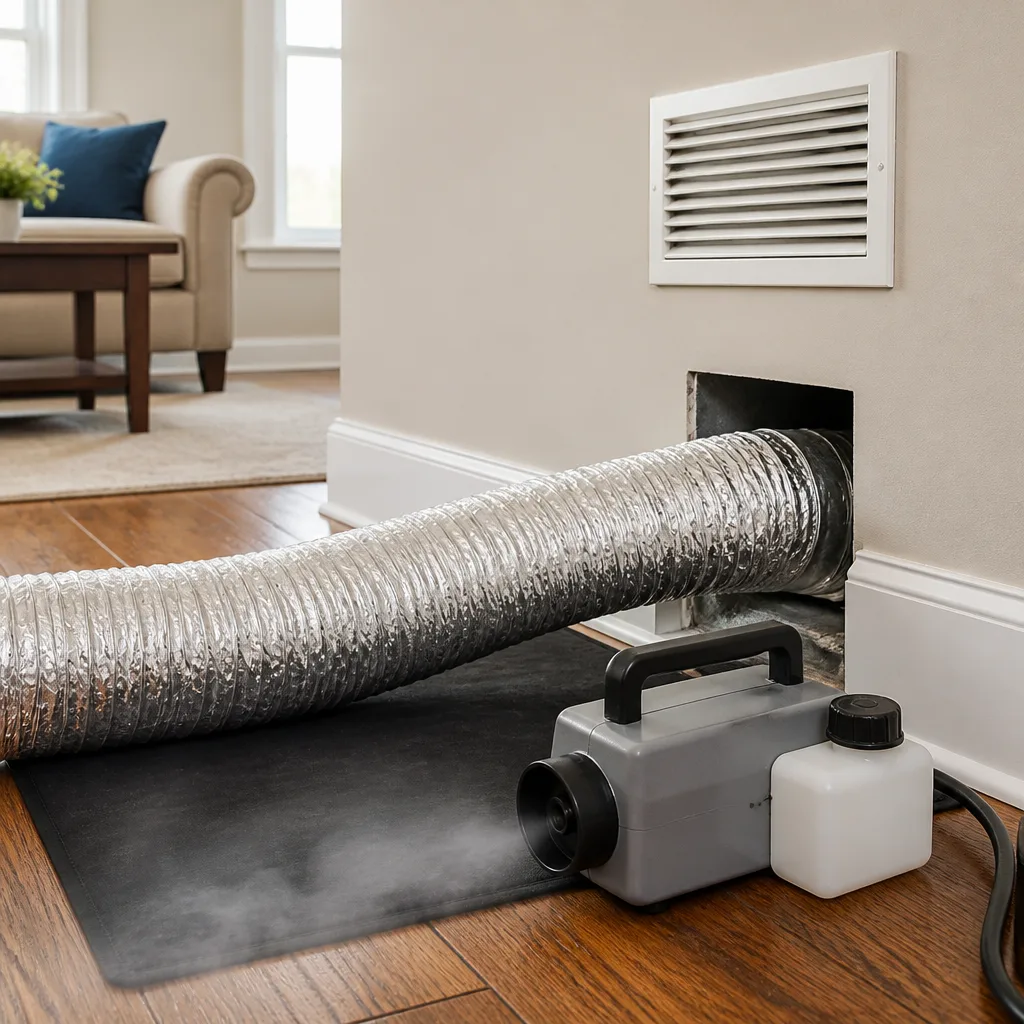 Sanitizing & deodorizing
Whole-system duct and dryer vent check with before-and-after photos - you see exactly what came out of your vents
That "$99 whole-house special" is a bait ad - the real number appears once they are in your hallway, or the "clean" is a shop-vac at the register. We photograph the inside of your ducts before and after instead.
Air Duct Cleaning Maintenance Checklist for San Jacinto Homeowners
If you’re changing your HVAC filter every 30 days and calling it a maintenance routine, you’re doing the equivalent of washing your car’s windshield and ignoring the oil. A real air duct cleaning maintenance checklist for San Jacinto homeowners isn’t about chore frequency. It’s about reading what your system is telling you. In our experience cleaning ducts across Riverside County, the homes with the worst air quality aren’t the ones that skipped cleaning. They’re the ones that cleaned at the wrong time, did the wrong prep, or never verified the work. And in San Jacinto, where summer temperatures regularly hit triple digits and the HVAC system runs nearly year-round, the margin for maintenance error is thin. This guide gives you the checklist we’d hand a homeowner who wants to do the right thing between professional cleanings, not just feel busy.
Styles & brands we work with
- Whole-home duct cleaning
- Dryer vent cleaning
- Camera inspection
- Sanitizing & deodorizing
Quick Answer
A proper air duct cleaning maintenance checklist has three layers: what to do before a professional cleaning, what to check after one, and what to monitor seasonally between visits. The single most important item most San Jacinto homeowners miss is checking the return duct connection at the air handler for gaps, which bypasses your filter entirely and pulls attic air into every room. Filter changes matter, but they only work if the duct system is sealed. Do the pre-cleaning prep, verify the post-cleaning results, and you’ll know whether your air duct investment actually took.
Table of Contents
- Pre-Cleaning Checklist: What to Do Before Your Appointment
- Post-Cleaning Verification: How to Know the Job Was Done Right
- Between-Service Maintenance That Actually Matters in San Jacinto
- Filter Selection and Static Pressure: The Overlooked Maintenance Variable
- 12-Month Seasonal Tracking Log Framework
- What Contractors Wish Homeowners Did (and the Myths to Ignore)
- Register Inspections and Rodent Debris: San Jacinto’s Specific Challenge
- Signs It’s Time to Escalate from Self-Monitoring to a Pro
- Common Mistakes to Avoid
- When to Call a Professional
- Frequently Asked Questions
- The Bottom Line
Pre-Cleaning Checklist: What to Do Before Your Appointment
Here’s a truth most duct cleaning companies won’t tell you because it makes their job harder: what you do in the two days before a cleaning has a direct impact on how much debris the equipment can extract. When we roll up to a home in San Jacinto with a Rotobrush rotary brush system and a Nikro HEPA-rated vacuum unit, we’re going to agitate and extract whatever is in the ducts. But if the registers are blocked by furniture, the return is buried under a stack of boxes in the garage, and the filter slot hasn’t been touched in four months, we’re fighting the house to do the job. Here’s the pre-cleaning checklist we send to every homeowner:
- Clear access to every supply and return register. Move furniture at least three feet away. In San Jacinto homes with floor registers, remove area rugs that overlap the vent. If a register is behind a couch, that section of duct gets less effective agitation because the brush line has to work around the obstruction.
- Clear the area around the air handler and furnace. The access panels need to come off, and the equipment needs working space. If your air handler is in a hall closet, empty the bottom shelf. If it’s in the garage, clear a five-foot zone around the unit.
- Note which rooms underperform. Walk the house the day before and feel the airflow at each register. Write down which rooms have weak airflow, which have no airflow, and which blow dust when the system kicks on. This gives the technician a diagnostic map before the cleaning starts. Rooms that underperform often have collapsed flex duct or disconnected runs, and a cleaning alone won’t fix those.
- Document recent remodels or pest activity. If you renovated a bathroom in the last six months, drywall dust is in your ducts. If you’ve seen rodent droppings in the garage or attic, that’s a data point that changes the cleaning protocol. Write it down. Hand it to the technician. Both pieces of information change how the job should be approached.
- Replace the filter before the cleaning, not after. You want clean air moving through a clean system. Install a fresh filter the day before so the blower isn’t pulling through a loaded filter during the cleaning process. But use a standard one-inch fiberglass or MERV 8, not a high-restriction MERV 13. We’ll cover why in the filter section below.
- Ensure all registers are accessible from below or remove them if needed. If you have painted-over registers that haven’t moved in a decade, leave them for the technician. Prying a stuck register loose with a screwdriver can crack the boot. It’s part of the service to handle stuck hardware.
Do these six things and the cleaning will be measurably more thorough. Skip them and you’ve paid for professional equipment to work around obstacles. The prep costs you nothing but an hour of your time. The difference in results is visible at the plenum when the job is done.
Post-Cleaning Verification: How to Know the Job Was Done Right
The dirty secret of the duct cleaning industry is that verification is largely left to the homeowner’s trust. A company shows up, runs equipment for an hour, hands you an invoice, and drives away. You have no way of knowing whether the ducts are actually clean unless you look. Here’s the post-cleaning verification checklist we recommend to every San Jacinto homeowner, whether we did the job or someone else did. If a company can’t satisfy these checks, ask hard questions.
- Visual confirmation at the plenum. The supply plenum is the metal box attached directly to the furnace or air handler. After a cleaning, the technician should show you this area, either with a camera scope or by opening a panel. The metal should look like metal, not like a carpet remnant. If you see visible dust and debris caked on the plenum walls after the job, the cleaning failed at the most critical junction in the system.
- Airflow balance across registers. Turn the system on after the cleaning and walk the house. Every register should be blowing. If one room went from weak to strong, that’s a sign the cleaning dislodged a blockage. If one room went from strong to nothing, a section of flex duct may have separated during agitation. Report that immediately. A professional cleaning should never leave a room with less airflow than it started with.
- Reduced filter loading in the first 30-day cycle. This is the most reliable long-term indicator of a thorough cleaning. Mark the date on a new filter the day the cleaning is done. Check it at 30 days. A properly cleaned duct system should result in a filter that looks only mildly dirty after a month. If the filter is clogged solid, the cleaning didn’t capture the debris that was in the ducts, or the return side has a gap pulling unfiltered air in.
- Absence of new odors when the system cycles. A clean system should not smell musty or dusty on startup. If the cleaning was done correctly, the “dust on furnace startup” smell that comes from burning off settled particles should be gone or drastically reduced. It won’t disappear entirely for a cycle or two, but by day three it should be undetectable.
- No debris visible at the registers. Use a flashlight and look down through the register grate. You should see the walls of the duct boot, not a wedge of packed dust. If debris is visible from the register opening, the brush line didn’t reach that far down the run. That’s a coverage gap, not a minor cosmetic issue.
One thing we do differently at Air Duct Cleaning in San Jacinto is that our verification standard starts with the equipment, not the invoice. A Nikro HEPA-rated vacuum doesn’t just blow dust around; it captures the loosened particulate in a contained airstream. That’s the difference between cleaning a duct and moving dust from one end of the house to the other. Ask any company you’re considering what equipment they bring and what you’ll be able to check when they’re done. If they can’t answer both questions clearly, keep looking.
Between-Service Maintenance That Actually Matters in San Jacinto
Professional duct cleaning in San Jacinto homes typically happens every three to five years, depending on household factors. Between those visits, there are maintenance tasks that genuinely move the needle on air quality and system performance, and there are tasks that waste your Saturday. This section separates them based on what we’ve observed in hundreds of San Jacinto homes.
Tasks worth doing between cleanings:
- Inspect the filter slot every 30 days, not just the filter. Look at the filter frame and the slot it slides into. If you can see light gaps around the filter edge, air is bypassing the filter. In San Jacinto’s dusty high-desert climate, that bypassed air carries fine silt directly into your blower and coil. A filter that doesn’t seal isn’t filtering.
- Check return grilles for dust caking quarterly. The return side is where unfiltered air enters the system. If the return grille looks like the lint screen on a dryer, you’ve got a filter bypass or a negative-pressure issue pulling dusty air from an unconditioned space. Wipe it down and then figure out why it got that dirty.
- Inspect the air handler cabinet for signs of standing water or rust. In San Jacinto’s summer, the evaporator coil produces gallons of condensation. If the drain pan isn’t draining properly, that moisture sits in the cabinet and creates the perfect environment for biological growth in the ductwork. Check for water stains quarterly.
- Walk the house and feel register airflow after any major renovation. Construction dust is the number one source of sudden duct contamination we see. After drywall work, flooring, or any job that generates dust, check your registers. If dust is visible around the vents within days, the work likely pulled construction debris into the return side.
Tasks that are mostly busywork:
- Vacuuming register openings weekly. This cleans the visible inch of the boot. It does nothing for the 20 feet of duct behind it. Skip the weekly routine unless you have visible pet hair accumulating.
- Spraying disinfectant into registers. Spraying anything into a register introduces moisture into the duct system, which is exactly what you don’t want in a hot, dry climate where biological growth can still occur in the presence of condensation. If you have an odor problem, find the source. Don’t mask it with spray.
- Installing filter covers or register filters in addition to the main filter. These add airflow restriction that your blower has to work against. On a properly designed system, the main filter is the filter. Extra filters at the register just starve the system for air and increase static pressure.
- Running the blower continuously to “air out” the ducts. Continuous fan mode can increase humidity distribution in San Jacinto’s already-dry climate, but it doesn’t clean anything. If you run continuous fan, do it with a clean filter and be aware it will load that filter faster.
The overall principle is this: maintenance tasks should address a specific problem you can see or measure. If you’re doing a task because a magazine told you to, but you can’t articulate what failure it prevents, it’s probably not worth doing. The exception is filter changes, which we’ll get into next because the filter question in San Jacinto is more nuanced than most homeowners realize.
Filter Selection and Static Pressure: The Overlooked Maintenance Variable
The most common maintenance mistake we see in San Jacinto homes is also the most well-intentioned. Homeowners buy a high-MERV filter at the hardware store because the packaging says it captures 99% of particles. They install it. They feel great. And then their system starts running longer, their energy bill climbs in July, and in some cases, the blower motor burns out years early. The reason is static pressure, and it’s the single most under-discussed topic in residential HVAC maintenance.
Your blower is designed to move a specific volume of air against a calculated resistance. Every component in the system adds resistance: the coil, the ductwork, the registers, and the filter. High-MERV filters with dense media add significantly more resistance than standard filters. A MERV 13 filter can add two to three times the pressure drop of a MERV 8. On a system designed for MERV 8, that’s not an upgrade. It’s a restriction. Airflow drops, the blower works harder, and in San Jacinto’s long cooling season, the system runs dozens of extra hours per year under stress.
Here’s the practical guidance:
- Standard one-inch filter slots: Use MERV 8 to MERV 11. Anything higher in a one-inch format is too restrictive for most residential blowers. Change every 30 to 60 days depending on household dust and whether you have pets.
- Four-inch or five-inch media cabinets: These are designed for higher-MERV filtration without the pressure penalty. If you have a Honeywell or Aprilaire media cabinet, you can run MERV 11 to MERV 13 because the increased filter surface area offsets the pressure drop. We regularly see these systems in newer San Jacinto homes, and they’re genuinely better at whole-home filtration when matched correctly.
- Households with allergies but a standard filter slot: Don’t try to solve an allergy problem with a restrictive one-inch filter. The filter’s job is to protect the equipment. Air cleaning happens at the equipment level, not the filter slot. If allergy control is the goal, look at a dedicated air cleaning system matched to your HVAC platform, whether that’s a Honeywell electronic air cleaner or an Aprilaire media system.
- After a professional cleaning: Start with a fresh MERV 8 and check it at 30 days. If it’s lightly loaded, extend the interval. If it’s dirty, shorten it. Let the filter tell you what the house is putting into the air stream instead of following a calendar.
The filter is a maintenance item, but it’s also a diagnostic tool. When we’re cleaning ducts in a home where the filter loads up in two weeks, we start asking about construction history, pet density, and whether the return duct is pulling from an attic space. A rapidly loading filter is almost always a sign of a bigger issue, not a reason to buy a more expensive filter.
12-Month Seasonal Tracking Log Framework
The best duct maintenance habit you can build in San Jacinto is a simple written log. Not a spreadsheet with formulas. A piece of paper taped inside the closet door where the air handler lives. Every season, you make four observations and write them down. Here’s the framework:
Spring (April, before cooling season starts):
- Change the filter. Note the date and the MERV rating installed.
- Inspect the return grille. Write down whether it’s clean, lightly dusty, or heavily caked.
- Check for rodent activity signals. In San Jacinto’s spring, mice and rats in attics are common. Look for droppings near duct boots, chewed flex duct insulation, or nesting material. Note anything suspicious.
- Note any musty or dusty smell when the system first cycles after being off.
Summer (July, peak load):
- Check the filter mid-season. Note loading: light, moderate, heavy at 30 days.
- Feel airflow at the registers in every room. Write down any room that feels weaker than the rest.
- Check the condensate drain and drain pan for standing water or mineral buildup.
- Listen for new noise from the blower. A blower struggling against a loaded filter has a distinct laboring sound.
Fall (October, before heating season):
- Change the filter again. Note the date.
- Inspect the ductwork visible in the garage or attic for new damage, drooping flex runs, or separated joints.
- Check the dryer vent exterior termination for lint accumulation. This is also the season to schedule Dryer Vent Cleaning in San Jacinto if it’s been more than a year.
- Note any burning smell on first heating cycle. This is often dust on the heat exchanger burning off, but it’s worth recording.
Winter (January, when the system runs intermittently):
- Check the filter. If the system has been running less, loading should be minimal. If it’s surprisingly dirty, that suggests a return-side leak pulling from an unconditioned space.
- Inspect registers in rooms that get less use. Dust settling into register openings during periods of low airflow can be pushed back out when the system kicks on.
- Review the year’s notes. If you logged increasing filter loading, persistent odors, or recurring weak airflow, that’s the signal to schedule a professional inspection.
The log doesn’t need to be detailed. Four entries a year, five minutes each. The value is the trend line. A single dirty filter tells you nothing. A year of logs tells you whether the system is stable or degrading. That’s the difference between reacting to problems and preventing them.
What Contractors Wish Homeowners Did (and the Myths to Ignore)
After years of working in San Jacinto homes, we’ve developed a short list of things we wish every homeowner knew before we arrive. And a longer list of things homeowners believe that are either false or actively counterproductive. Here’s the honest version of both.
What we wish homeowners did:
- Know where their filter is and what size it takes. We can’t count the number of times we’ve arrived at a home in San Jacinto and the homeowner has never located the filter slot. It’s the most basic maintenance access point in the system. Know where it is, know the size, and keep a spare on hand.
- Tell us about pets, even if the pet is clean. Pet dander is invisible until it’s not. A home with two dogs has a fundamentally different duct contamination profile than a home with no pets, and it matters for both the cleaning approach and the between-service recommendations.
- Be honest about the last time the ducts were cleaned. If the answer is “never” in a 30-year-old home, that’s useful information. If the answer is “two years ago but I forget who did it,” that’s also useful. The age and history of the system changes how we plan the job.
- Take before photos of the registers and hand them to us. A homeowner who documents the before state is a homeowner who understands that verification matters. We’ll show you the after. The comparison should be obvious.
Myths to stop believing:
- Myth: Ducts need to be cleaned every year. No. In most San Jacinto homes, three to five years is appropriate. Exceptions apply for homes with heavy pet loads, recent construction, or a documented rodent intrusion. But annual cleaning for a routine household is overkill. What needs annual attention is the dryer vent, not the HVAC ducts.
- Myth: A higher MERV filter is always better. We covered this above, but it bears repeating. The filter that’s best for your system is the one that fits your system’s static pressure budget, not the one with the highest number on the package.
- Myth: Duct cleaning solves all indoor air quality problems. Duct cleaning removes accumulated debris from the duct system. It does not fix a leaking return, a mold problem in the wall cavity, or a source of standing water in the air handler. Those are different problems that require different solutions, sometimes including air duct repair in San Jacinto.
- Myth: The EPA doesn’t recommend duct cleaning, so it’s a scam. This is a misunderstanding of what the EPA actually says. The EPA says duct cleaning has not been proven to prevent health problems, which is true and a statement about medical evidence. It does not say ducts never need cleaning. If your ducts are visibly caked with debris, harbor rodents, or are pushing construction dust into your living space, cleaning is a mechanical issue, not a wellness claim.
- Myth: You can clean your own ducts with a leaf blower and a shop vac. You cannot. The tool you already own will not reach the full length of the duct runs, will not mechanically agitate the debris bonded to the duct walls, and will not capture what you loosen. What you’ll do is blow a portion of the dust into your house and pat yourself on the back. Professional duct cleaning uses equipment like a Rotobrush rotary brush system for mechanical agitation and a Nikro HEPA-rated vacuum for extraction. That’s the difference between cleaning a duct and rearranging dust.
The overall theme of the contractor wishlist is this: information is maintenance. The homeowner who can tell us the filter history, the pet situation, the renovation timeline, and the age of the system is the homeowner who gets the most useful service. The homeowner who shrugs and says “I don’t really know” gets a generic cleaning. Generic is fine for some things. Ductwork isn’t one of them.
Register Inspections and Rodent Debris: San Jacinto’s Specific Challenge
San Jacinto sits at the base of the San Jacinto Mountains in a high-desert climate that combines two forces working against your ductwork: fine wind-blown silt and a healthy rodent population in the surrounding open space. Both find their way into residential duct systems, and both require specific maintenance attention beyond what a generic checklist would tell you.
The silt problem: San Jacinto’s dry, windy conditions put fine particulate into the air that settles on every horizontal surface, including the inside of your duct runs. This silt is finer than typical household dust. It works its way through gaps in the system, through filter bypasses, and into the blower assembly. The maintenance response is two-fold: first, verify that your return duct is sealed at every joint by checking for dust streaks around the fittings, and second, be realistic about filter loading. In San Jacinto’s spring winds, a filter can load in three weeks that would last three months in a coastal climate. This isn’t a sign of a problem. It’s a sign of where you live. Adjust the filter interval accordingly.
The rodent problem: San Jacinto’s proximity to undeveloped land means attics and crawl spaces see rodent activity that many homeowners don’t discover until the smell or the noise becomes impossible to ignore. By that point, the damage to ductwork is often done. Rodents chew through flex duct insulation, nest inside duct runs, and leave debris that contaminates the entire air stream. The maintenance response is seasonal register inspection. Every spring and every fall, remove a few register covers in different rooms and do a visual check. Look for droppings, shredded insulation, nesting material, or chew marks on the duct boot. If you find any of it, don’t wait for the next scheduled cleaning. Call a professional immediately. A duct system with rodent contamination is a health and air quality issue that self-monitoring will not resolve.
In homes near the foothills on the east side of San Jacinto, this is a real and recurring pattern. We’ve cleaned ducts in homes within a mile of open Duct Cleaning San Jacinto home territory where the entire return system had been used as a rodent highway. The homeowners had no idea because the activity was in the attic, well above their sight line. The only reason they found out was a seasonal register inspection that revealed droppings. That’s the maintenance task that genuinely protects air quality in this specific location.
Signs It’s Time to Escalate from Self-Monitoring to a Pro
Self-monitoring is the maintenance layer that catches problems early. But there are signals that mean the problem has moved beyond what a homeowner can observe and address. These are the escalation triggers:
- Visible mold growth on any accessible duct surface. If you see discoloration on the inside of a register boot, the register grille, or the visible portion of ductwork, stop self-monitoring and get a professional assessment. Mold in a duct system is not a filter-change problem.
- Persistent musty odor that doesn’t clear after filter replacement. A system that smells musty after a fresh filter and a visual check of the drain pan has a problem deeper in the system. The odor source could be in the duct runs, the coil, or the insulation. That requires professional diagnostic work.
- Documented rodent activity. If you find droppings, nesting material, or chew damage during a register inspection, that system needs professional cleaning and likely duct repair. Rodent contamination doesn’t resolve on its own.
- Weak airflow in multiple rooms that persists through multiple filter changes. If the system is blowing weak and new filters don’t help, the problem is ductwork, not filtration. Collapsed flex duct, disconnected runs, or a badly designed system all require professional diagnosis.
- Filter loading that suddenly spikes without a clear cause. If the filter goes from normal loading to clogged in a week and you haven’t done construction, check for a return-side leak pulling from an attic or crawl space. That’s a professional call.
When you hit one of these triggers, Air Duct Cleaning in San Jacinto is the call to make. We bring equipment built for diagnosis and remediation, not just surface cleaning. Rotobrush rotary brush agitation, Nikro HEPA-rated vacuum extraction, and the ability to assess whether the issue is dirt or damage. And because we also handle duct repair, we don’t have to stop at cleaning if the inspection reveals a structural problem.
Common Mistakes to Avoid
- Treating the filter change as the entire maintenance routine. The filter is one component in a system. If the return duct has gaps at the air handler connection, a fresh filter does nothing because attic air is bypassing it. Check the system, not just the consumable.
- Buying the highest-MERV filter you can find without checking compatibility. High-MERV filters add static pressure that your blower may not be designed to handle. In San Jacinto’s long cooling season, that translates directly into shorter equipment life. Match the filter to the system.
- Skipping the post-cleaning verification because you trust the company. Every duct cleaning should end with visual confirmation. If the company can’t show you the cleaned plenum or you can’t see a difference at the registers, the job didn’t work. Trust should be earned with evidence.
- Ignoring rodent signals because you don’t want to deal with the problem. Rodent problems in San Jacinto attics get worse, not better. Every week of delay means more damage to duct insulation and more contamination in the air stream. Deal with it when you first see the sign.
- Doing maintenance tasks that are actually busywork while skipping the tasks that matter. Vacuuming register grilles weekly while ignoring a gap in the return plenum is the duct maintenance equivalent of polishing the doorknob while the door frame rots. Focus on the tasks that address real failure modes.
- Assuming a cleaning fixes pre-existing duct damage. A duct cleaning removes debris. It does not seal holes, reconnect separated flex duct, or repair crushed runs. If airflow is weak, the problem may be structural, and the call is Air Duct Repair in San Jacinto, not another cleaning.
- Waiting until the system smells bad to schedule a cleaning. By the time odor is noticeable, the contamination is significant. Maintain on a schedule based on your household factors, not on waiting for the problem to announce itself.
When to Call a Professional
Self-monitoring catches shifts in your system’s condition. A professional call is warranted when you’ve documented a pattern that self-monitoring can’t address, or when you encounter one of the escalation triggers above. Specifically: visible mold on any duct surface, confirmed rodent activity, persistent musty odor after filter replacement, weak airflow across multiple rooms that doesn’t improve, or a filter that suddenly loads in days without explanation. If any of those conditions exist in your San Jacinto home, don’t wait for the next scheduled maintenance cycle. Duct Cleaning San Jacinto offers free estimates in San Jacinto, and our scope covers all three layers of the problem: cleaning with Rotobrush and Nikro equipment, Dryer Vent Cleaning in San Jacinto for the fire-safety side of exhaust ductwork, and repair for the structural issues that cleaning doesn’t solve. Call (866) 569-6948 and we’ll assess the system honestly. If cleaning isn’t what it needs, we’ll tell you that.
Frequently Asked Questions
Air duct cleaning in San Jacinto typically ranges from $350 to $750 for a standard single-family home, with larger homes or heavily contaminated systems running $800 to $1,200. The price depends on the number of systems, the degree of contamination, and whether rodent remediation or repair work is needed. Be wary of quotes below $200; that’s not a professional cleaning with proper agitation and HEPA extraction, that’s a shop-vac special. Call (866) 569-6948 for an exact quote; estimates are free.
For most San Jacinto homes, air duct cleaning every three to five years is the right interval. Factors that shorten the interval include pets, recent renovation work, smokers in the household, proximity to open land with high rodent activity, and unusually high seasonal dust loading. Factors that lengthen it include a well-sealed home, a good filter maintenance routine, and a modern system in good condition. The honest answer is that the interval depends on your household, not a calendar. If it’s been five years or more, it’s time for a professional assessment.
Low-priced duct cleaning quotes usually mean inferior equipment, abbreviated processes, or both. A company running a shop vac and a spinning brush from a hardware store is not doing the same job as a contractor running a Rotobrush rotary brush system and a Nikro HEPA-rated vacuum. The cheap quote also often comes with the classic upsell: the technician arrives, finds “additional contamination,” and the price doubles. One flat price per system agreed before work starts is the model we work under. If the quote sounds too cheap, the job will be too cheap, too.
Verification starts with visual confirmation at the plenum, the metal box attached to the furnace or air handler. The technician should show you this area after cleaning; it should look like clean metal. Next, check register airflow in every room and confirm it hasn’t decreased. Finally, install a fresh filter the day of the cleaning and check it at 30 days. Light loading means the system was actually cleaned. Heavy loading means debris was left behind. Any company that can’t show you the before-and-after or won’t walk you through verification isn’t earning your trust. Call (866) 569-6948 if you want a cleaning with before-and-after documentation.
Duct cleaning removes accumulated particulate from the duct system, which can reduce the amount of dust, dander, and pollen that circulates through your living space. It is not a medical treatment and the EPA has not proven that duct cleaning prevents health problems. What it does is remove a reservoir of accumulated debris that otherwise gets distributed by the HVAC system. In San Jacinto’s dusty high-desert climate, that reservoir builds faster than in coastal areas. For allergy-conscious households, duct cleaning works best as part of a broader approach that includes proper filtration and source control.
Mold in ducts is less common in San Jacinto than in humid climates because the ambient air is dry, which limits the moisture that mold needs. Where mold does occur in San Jacinto homes, it’s almost always tied to a specific moisture source: a failed condensate drain, a leaking evaporator coil, or a roof leak that’s introduced water into the duct system. If you see mold staining on a register boot or vent, treat it as a moisture investigation first and a cleaning second. Fix the water source and then have the contaminated duct sections cleaned or replaced.
The Bottom Line
The air duct cleaning maintenance checklist for San Jacinto homeowners comes down to three layers. Before a professional cleaning, clear register access, document airflow problems, and note any renovation or pest history. After a cleaning, verify the work at the plenum, check register airflow, and monitor filter loading for 30 days. Between cleanings, choose the right filter for your system’s static pressure budget, inspect registers seasonally for rodent debris, and keep a four-entry-per-year log that tracks the trend line, not just the calendar. The maintenance that matters is the maintenance that addresses a specific failure mode you can see or measure. Everything else is busywork. If your log shows a pattern that self-monitoring can’t resolve, call (866) 569-6948. We’re in San Jacinto, we bring professional-grade equipment, and we’ll tell you honestly whether the problem is dirt, damage, or neither.
Written by the team at Duct Cleaning San Jacinto, serving San Jacinto since 2015.
See the difference
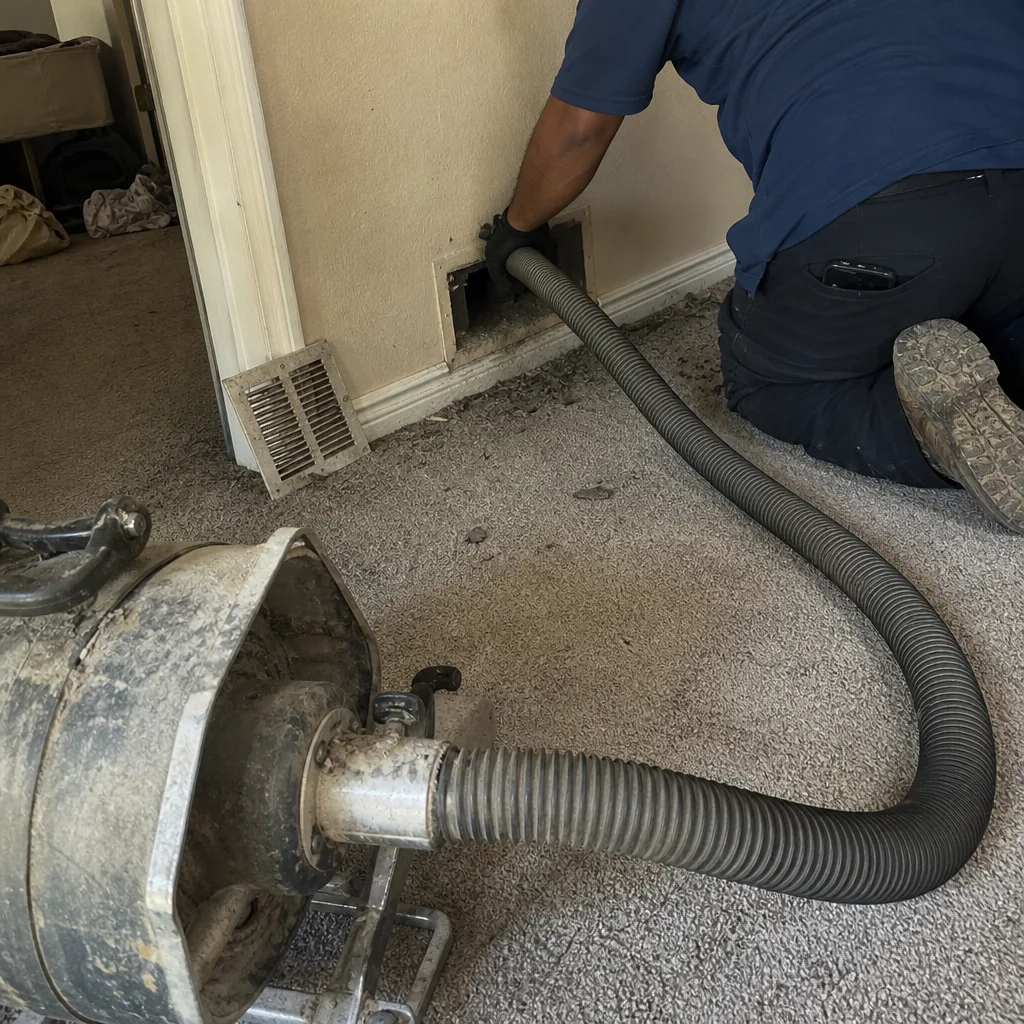 Before
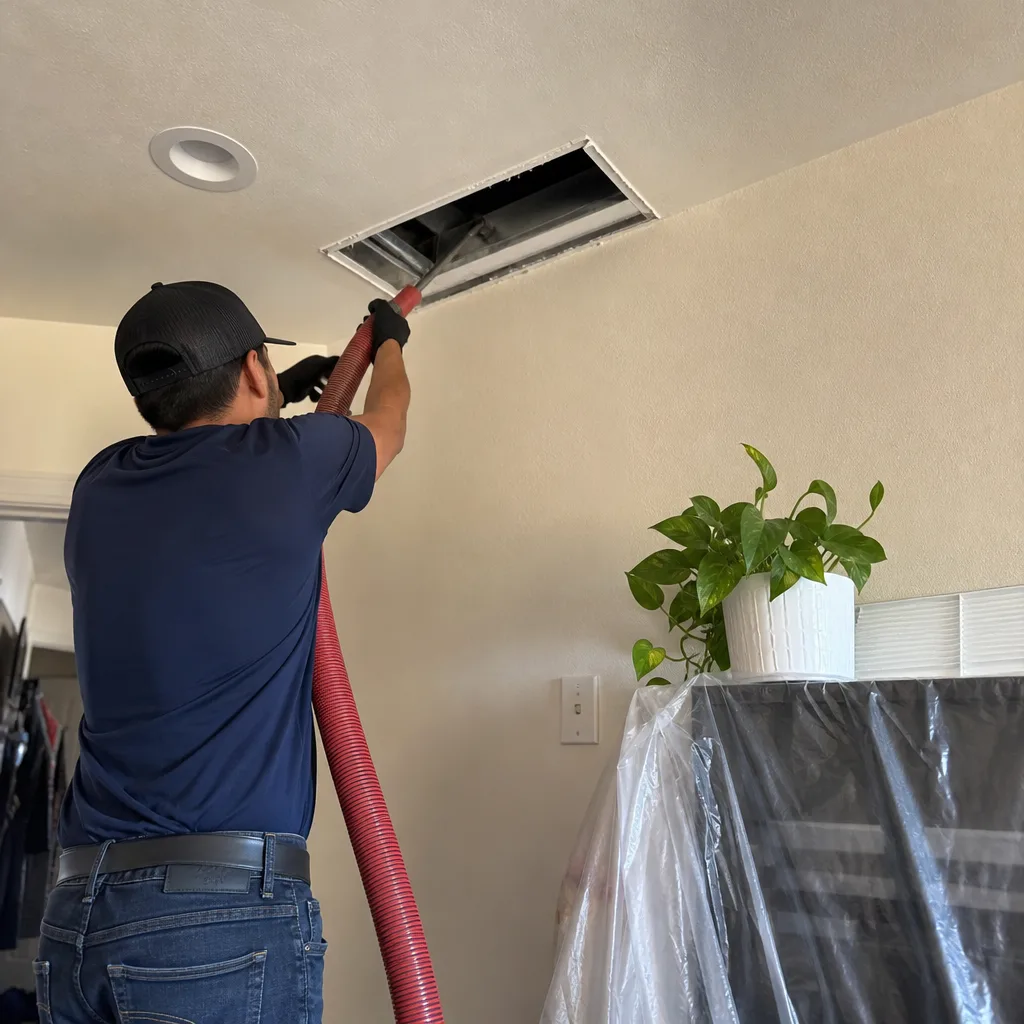 After
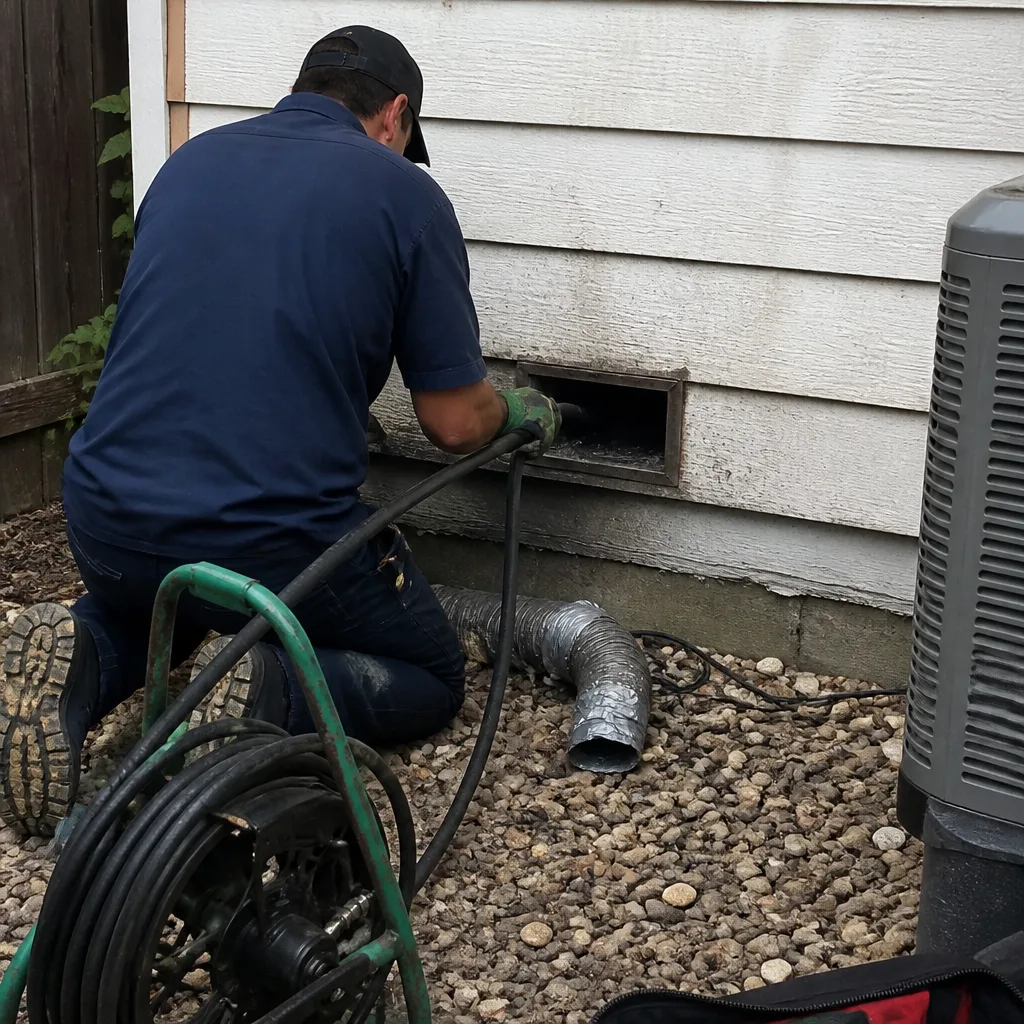 Before
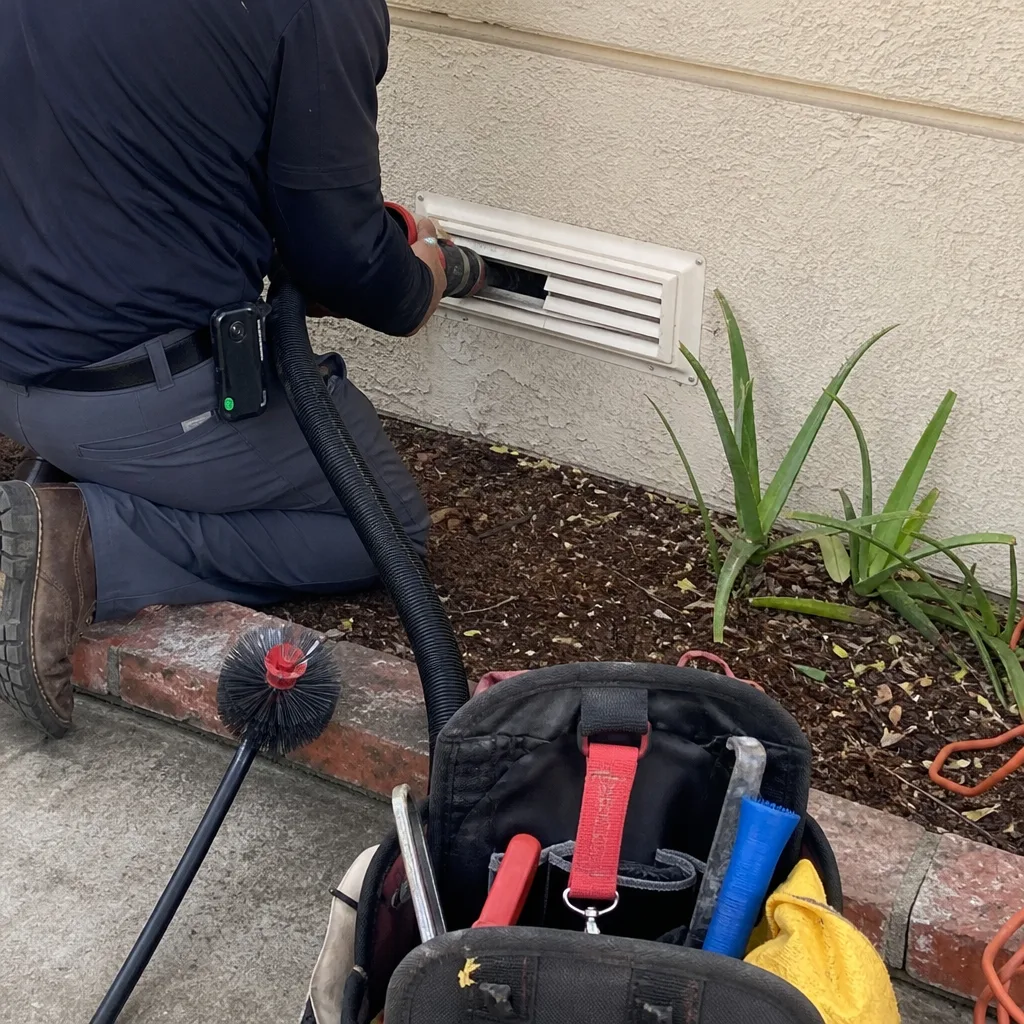 After
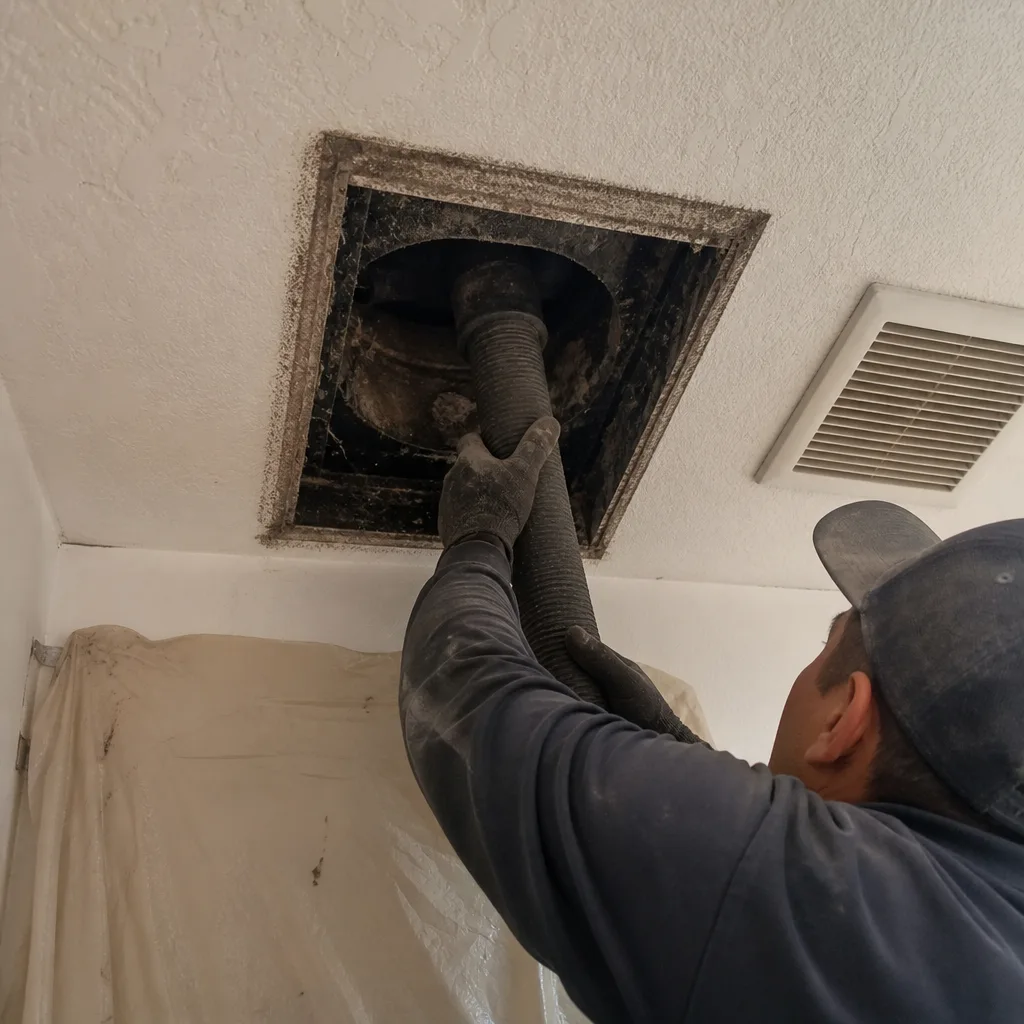 Before
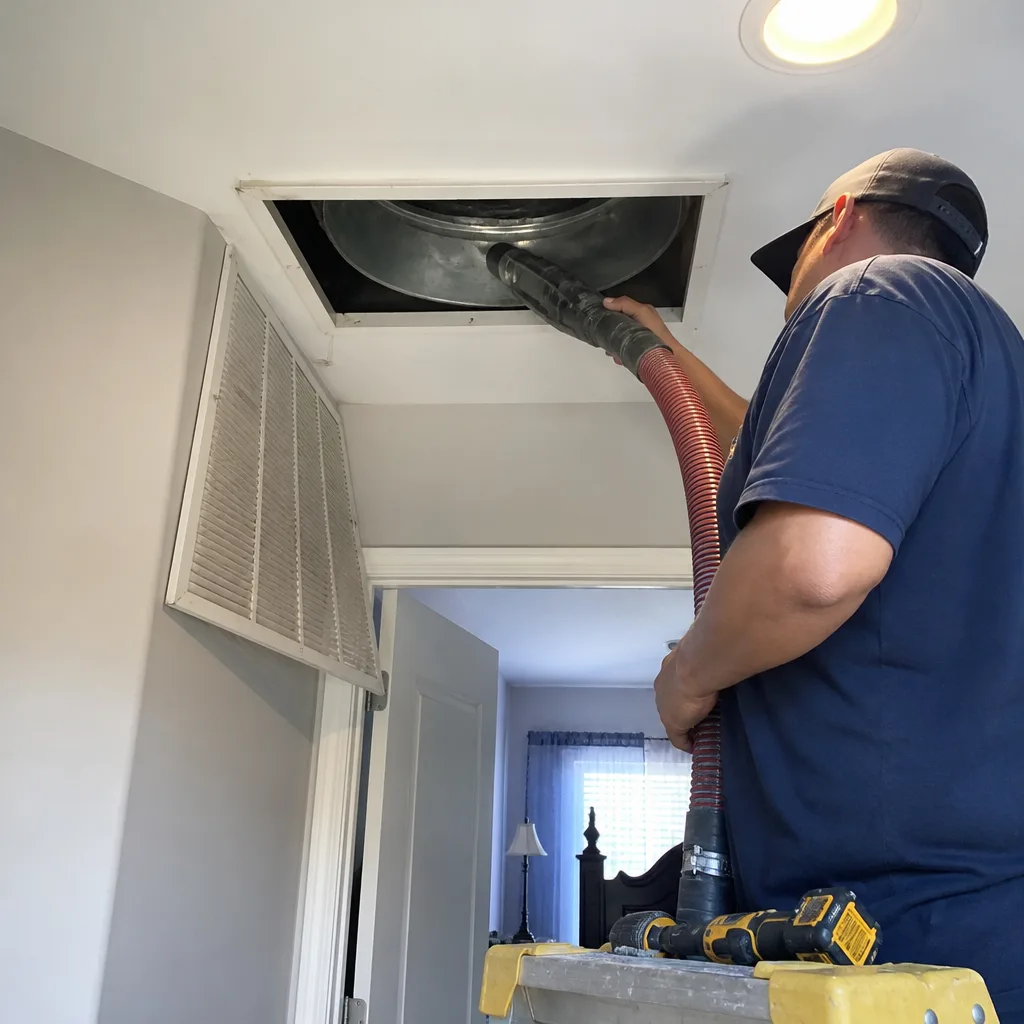 After