
Last updated November 2, 2026
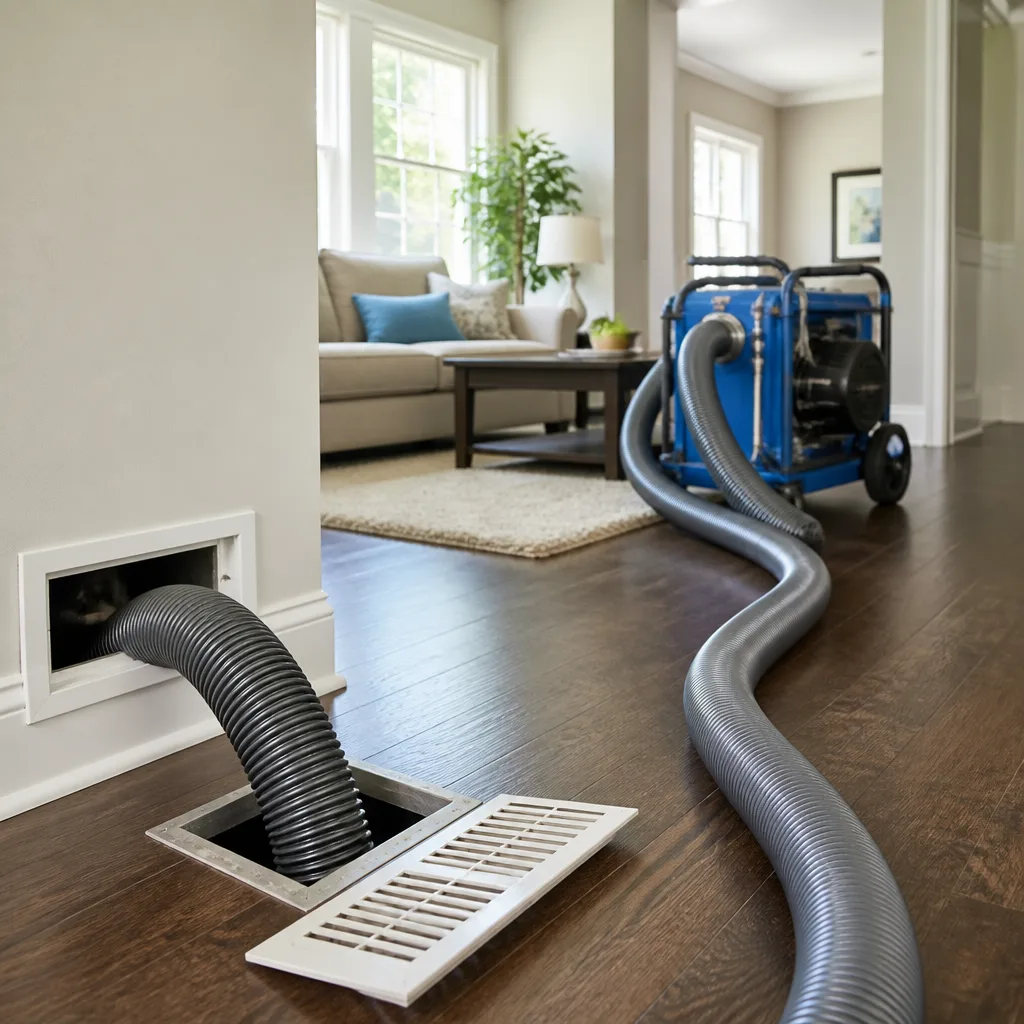 Whole-home duct cleaning
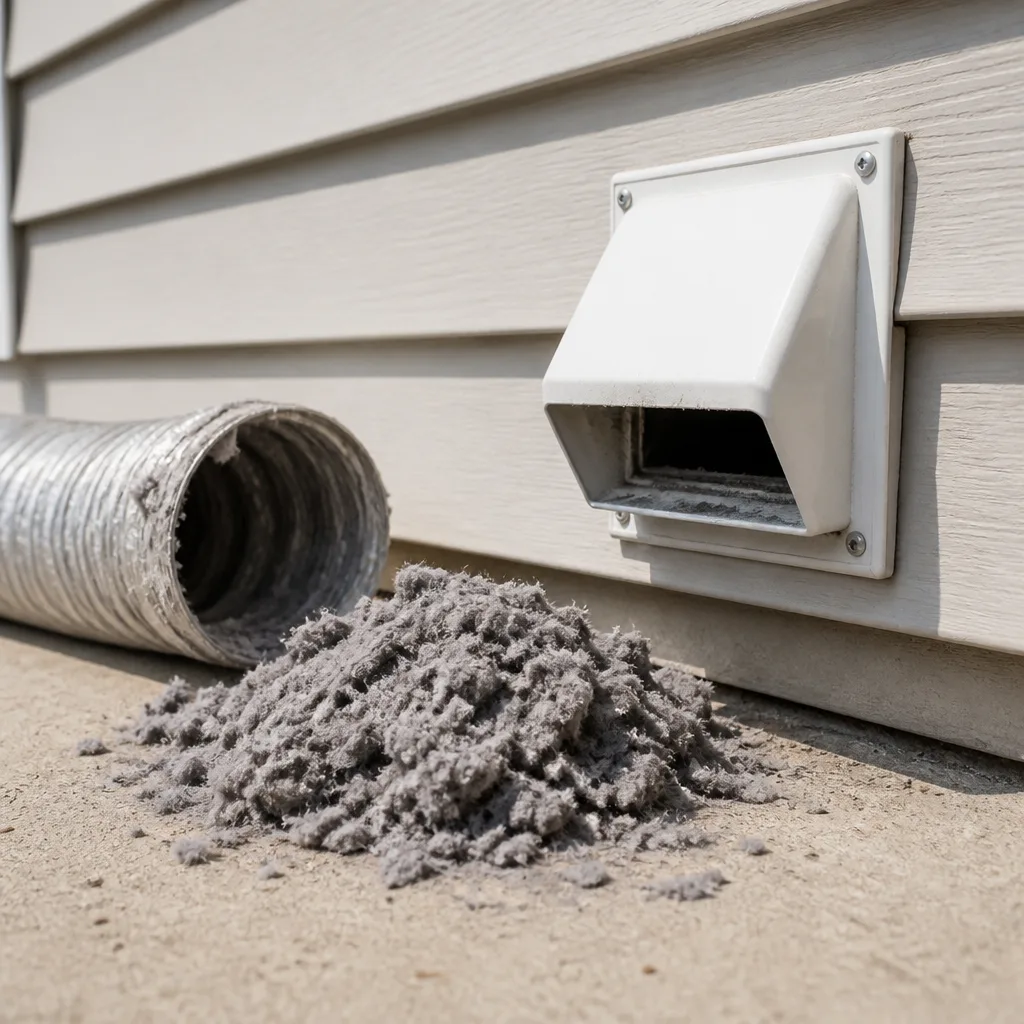 Dryer vent cleaning
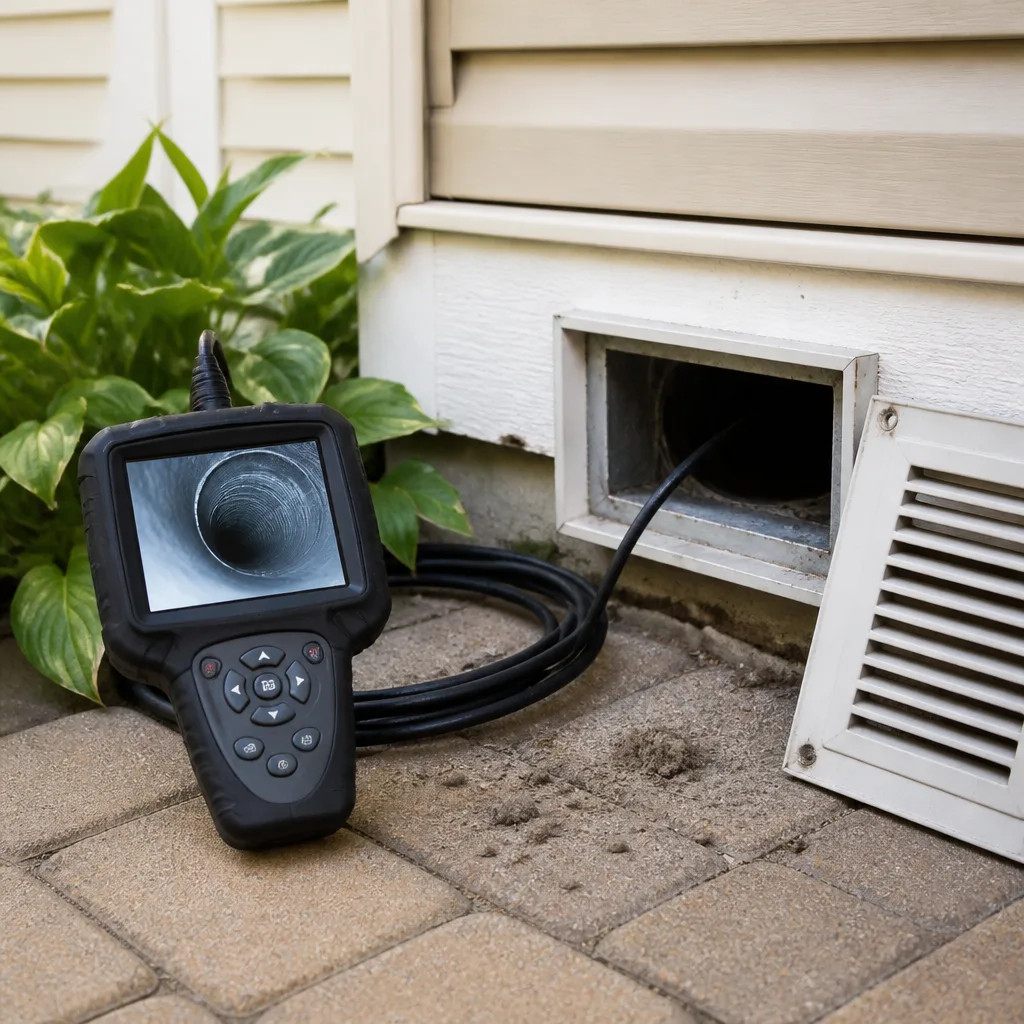 Camera inspection
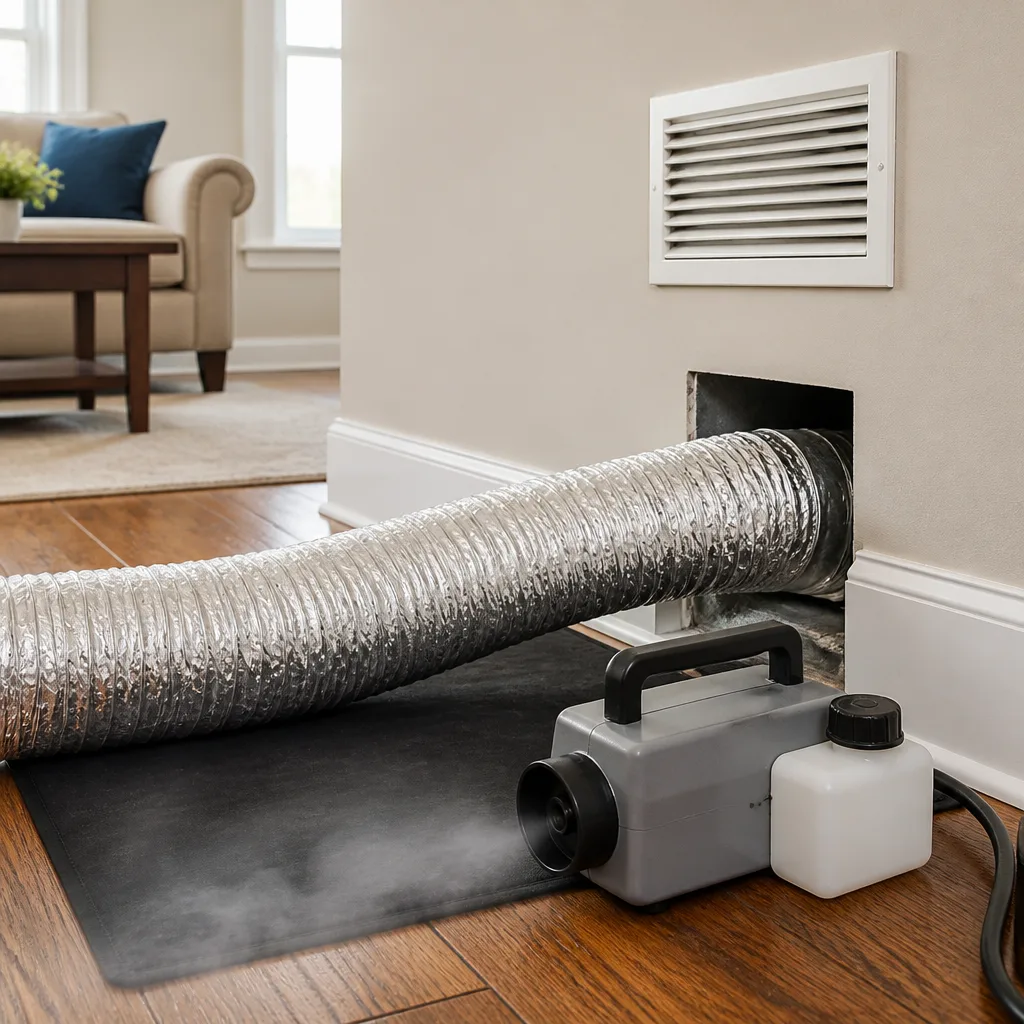 Sanitizing & deodorizing
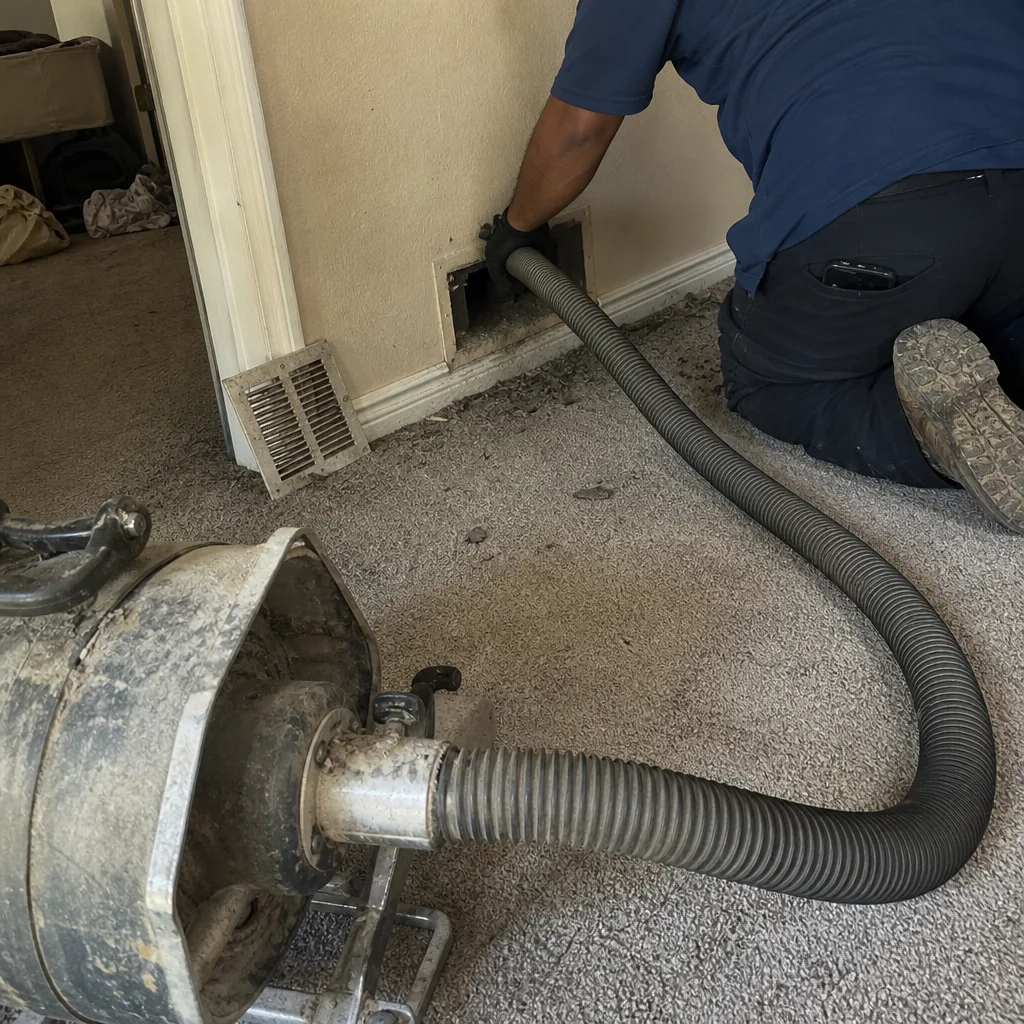
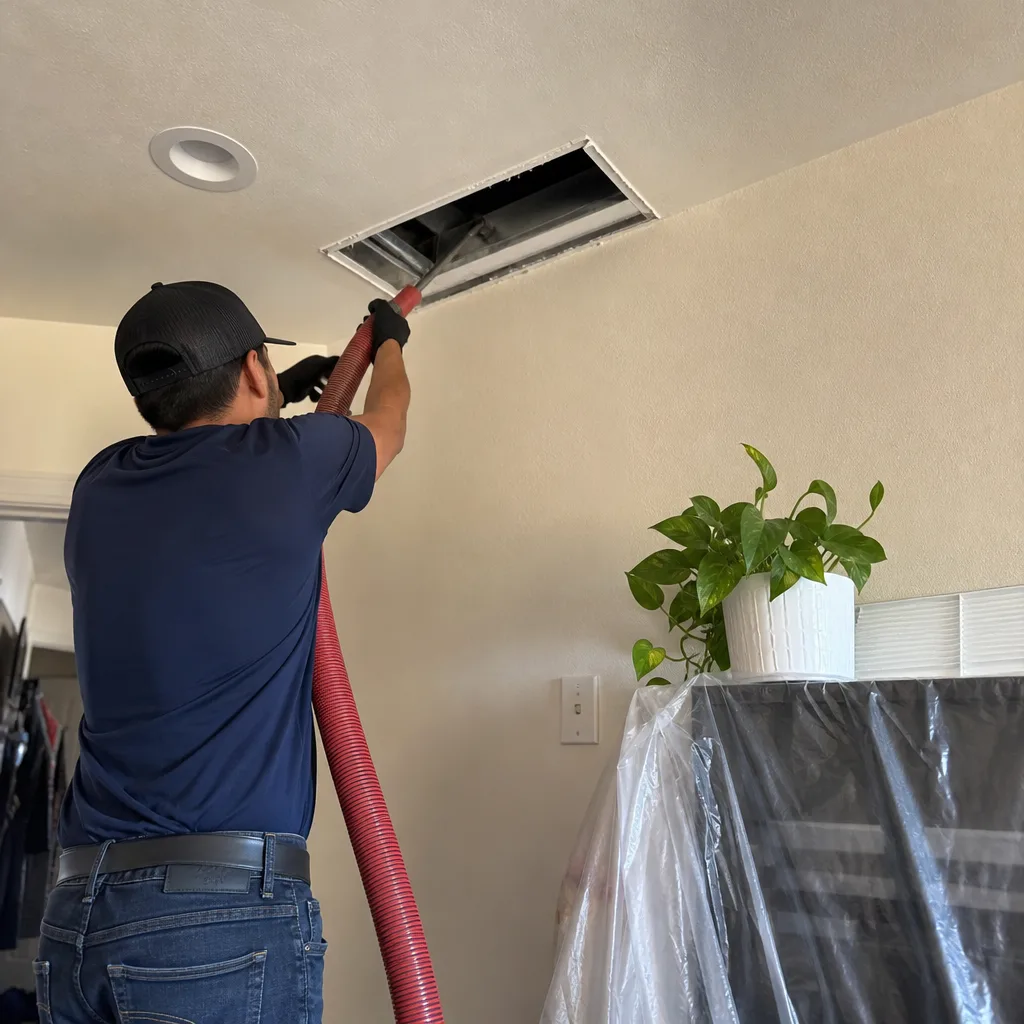
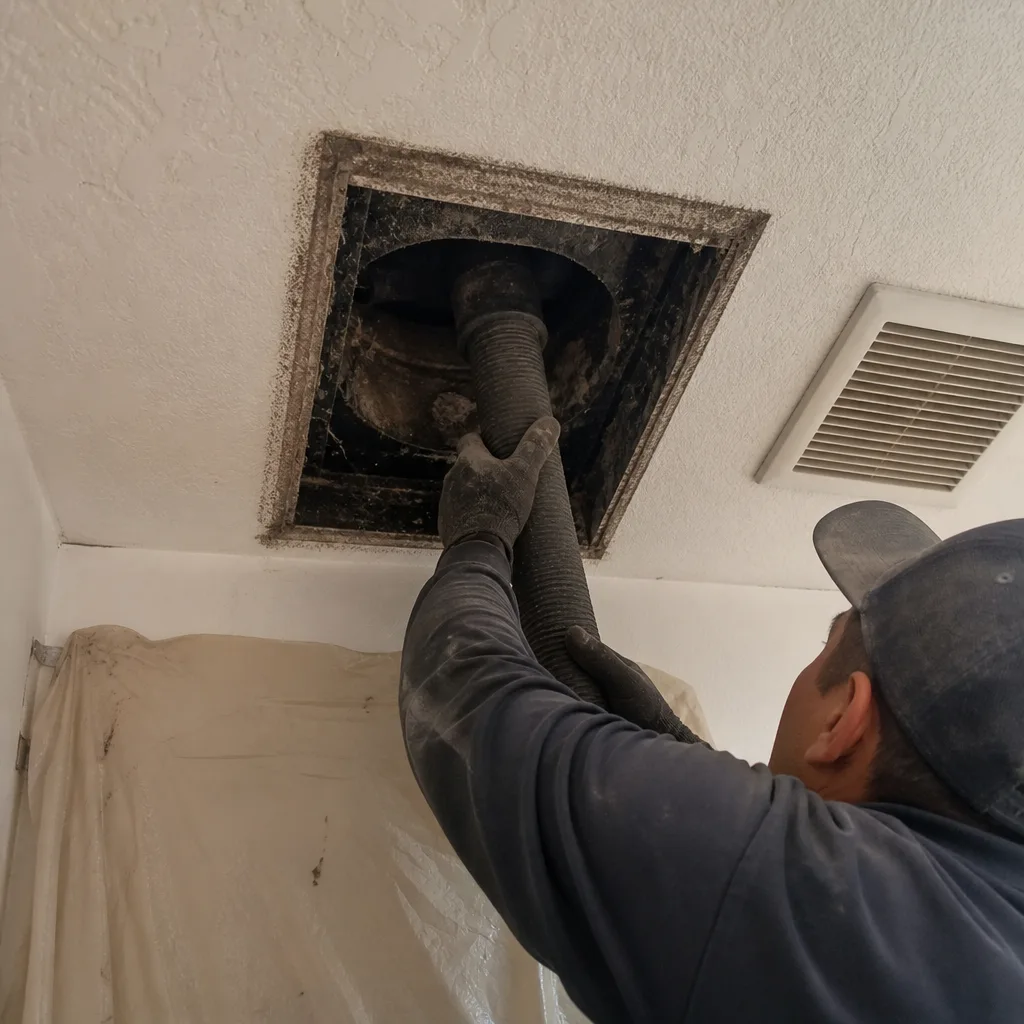
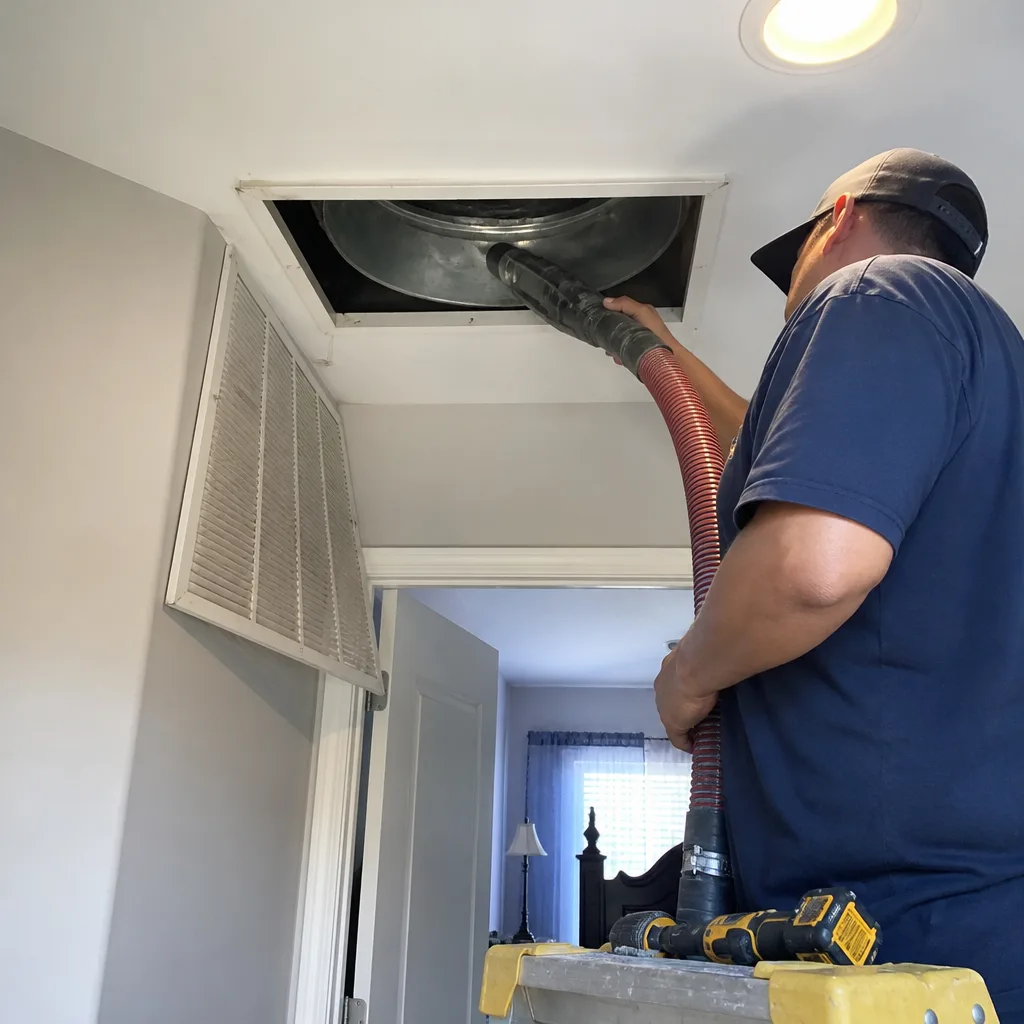
Whole-system duct and dryer vent check with before-and-after photos - you see exactly what came out of your vents
That "$99 whole-house special" is a bait ad - the real number appears once they are in your hallway, or the "clean" is a shop-vac at the register. We photograph the inside of your ducts before and after instead.
Seasonal Air Duct Cleaning Care for San Jacinto: Year-Round Homeowner’s Guide
During the 2020 and 2022 wildfire seasons, air quality monitors in San Jacinto recorded PM2.5 levels that, over a two-week stretch, deposited as much fine particulate in duct systems as a typical year of normal operation. Let that land: fire season alone can reset your cleaning timeline. Most homeowners in the San Jacinto Valley have heard the generic “clean every 3-5 years” rule, but that advice was written for mild, coastal climates. It doesn’t account for 110°F summer heat, smoke events, winter inversions that trap particulates against the valley floor, or spring wind seasons that push desert dust through every gap in your home’s envelope. This guide breaks down what actually happens to your ductwork in each season here, what to watch for, and when an out-of-cycle Air Duct Cleaning is the right call.
Styles & brands we work with
- Whole-home duct cleaning
- Dryer vent cleaning
- Camera inspection
- Sanitizing & deodorizing
Quick Answer
Seasonal air duct cleaning in San Jacinto means adjusting your inspection and service timing around four distinct valley conditions: summer heat that accelerates microbial growth on coils, fall wildfire smoke that can overload filters and ducts in days, winter inversions that concentrate outdoor particulates indoors, and spring construction and wind events that load ducts with dust faster than any other time of year. A fixed 3-5 year interval ignores all four.
Table of Contents
- Summer: Heat, Humidity, and the Biofilm Problem
- Fall Wildfire Smoke: Your Response Protocol
- Winter Inversions and Heating System Startup
- Spring: Construction Dust and Desert Wind Events
- Building a Seasonal Inspection Rhythm That Works
- Why Equipment Matters for Seasonal Cleaning
- Common Mistakes to Avoid
- When to Call a Professional
- Frequently Asked Questions
- The Bottom Line
Summer: Heat, Humidity, and the Biofilm Problem
San Jacinto summers regularly push past 110°F. Your air conditioner runs hard from June through September, and that constant cycling creates a cycle most homeowners never see: the evaporator coil gets cold, condensation forms, and dust from the return air stream sticks to that wet surface. Now add heat. The combination of moisture, organic dust, and sustained warmth is precisely what microbial growth needs to establish itself on the coil and in the first few feet of supply ductwork.
Once a biofilm forms on the coil, two things happen. First, the coil’s efficiency drops, meaning your system runs longer to hit the same setpoint. Second, the biofilm acts as a glue, capturing more particulates that would otherwise pass through and get caught by the filter. In our experience, homeowners who skip duct cleaning through multiple hot seasons end up with a layer of biological material on their coil and adjacent ducts that no standard filter change addresses. The coil sits upstream of the filter in most systems, so the filter is protecting the coil from some dust, but it cannot protect it from moisture-driven growth.
What this means for San Jacinto homeowners:
- AC season is when biofilm problems compound fastest in uncleaned systems. The longer you run a system with dirty ducts, the more material accumulates on the coil, and the more that material degrades system performance.
- If your AC has been running more than usual, or if anyone in the house notices a musty smell when the system first kicks on, that odor is often coming from the coil and the ductwork immediately downstream of the evaporator.
- The best time to schedule a thorough air duct cleaning is before peak cooling season, not during it. Late spring works well in San Jacinto, but if you missed that window, any time is better than letting another full summer cycle through a loaded system.
For homes with whole-home air quality platforms like Honeywell or Aprilaire systems, the seasonal interaction is even more important to watch. These systems rely on consistent airflow to operate correctly. A biofilm-coated coil and restricted duct runs force the blower to work against higher static pressure, which can shorten blower motor life and reduce the effectiveness of any integrated filtration. Cleaning the duct system restores the airflow these platforms are designed around. We work with Honeywell and Aprilaire systems regularly and see this dynamic in real time: the ductwork is part of the IAQ system, not a separate component. When it’s dirty, the entire system underperforms.
Fall Wildfire Smoke: Your Response Protocol
Fall is no longer a neutral season in the San Jacinto Valley. It’s smoke season. The 2020 and 2022 fires demonstrated how quickly valley air quality can collapse, and how persistently that smoke hangs in the region. When PM2.5 levels spike, the particulates don’t just irritate your eyes and lungs outdoors. They get pulled into your return air stream, they load your filter, and a meaningful portion works its way into your duct system, especially around register boots, plenum connections, and any areas where small gaps disturb the airflow pattern.
Here is the Air Duct Cleaning Emergency Preparedness Guide for San Jacinto Homes response protocol we recommend when the AQI spikes:
- Upgrade your filter immediately. If you normally run a standard MERV 8 filter, switch to the highest MERV rating your system can handle without choking airflow. For most residential systems, that’s MERV 11 to MERV 13. Check your system’s documentation or ask a technician before jumping to a MERV 13 if you’re not sure your blower can handle the pressure drop.
- Run the fan continuously. Set your thermostat fan setting to “On” rather than “Auto” during smoke events. Continuous airflow keeps particulates moving toward the filter rather than settling in the ductwork.
- Check the filter after 72 hours. If it looks heavily loaded after just three days, that’s a strong signal that significant particulate has entered the system. A filter that loads this fast usually means some of that material has already bypassed the filter or settled in the duct runs.
- Inspect your return registers. Look for visible dust accumulation around the grilles. If returns show visible particulate film, that material is also inside the duct runs connected to those registers.
- Consider an out-of-cycle cleaning. If your filter loaded visibly within a week, or if anyone in the home is experiencing worsened respiratory symptoms, an out-of-cycle air duct cleaning is justified. Smoke particulate is fine enough to penetrate deep into the system, and it doesn’t resolve on its own.
We recommend this protocol because we have seen what happens when it’s ignored. Smoke residue in ductwork persists. It doesn’t blow through the system and disappear. It embeds in dust layers, it coats duct surfaces, and it re-enters the living space every time the blower cycles. For San Jacinto homeowners who lived through the 2020 and 2022 events, this is not hypothetical. If your home was in the smoke plume path for more than a few days and you haven’t had the ducts cleaned since, the system is carrying residual material from those events.
Winter Inversions and Heating System Startup
San Jacinto winters are mild by most standards, but the valley’s geography creates a specific air quality problem that surprises homeowners who moved here from other parts of Southern California. Cold air sinks. When a high-pressure system settles over the valley in December and January, it traps cooler air near the ground, and with it, particulates from vehicle traffic, wood burning, and agricultural activity. These inversion events can persist for days.
The problem for your duct system isn’t just what’s outside. It’s what happens when cold outdoor air settles against your home’s exterior while your heating system cycles warm air through the ductwork. Temperature differentials between the conditioned interior and the cold exterior cause condensation in unexpected places, particularly in uninsulated attic duct runs. That condensation, combined with the particulate load from inversion conditions, creates another opportunity for material to stick to duct surfaces.
Then there is the startup problem. After months of sitting dormant since spring, your furnace fires up for the first time in November or December, and it blows through the entire duct system. Every hair, dust mote, pollen fragment, and particulate that settled in the ductwork during the summer and fall gets launched into the living space in the first few heating cycles. For San Jacinto homeowners who have not had their ducts cleaned in several years, that first heating cycle is effectively a dust cannon.
What to watch for in winter:
- Visible dust on furniture within the first week of heating season
- A burning smell when the furnace first cycles (this is often just accumulated dust on the heat exchanger, but if it persists beyond a day or two, have the system inspected)
- Dry, scratchy throats or increased sneezing when the heat runs
- Uneven heating between rooms, which can indicate duct restrictions from accumulated debris
A professional cleaning before heating season begins removes the dormant-season deposit and means the first cycle doesn’t distribute months of accumulated material into your home. If you’re already well into winter and seeing dust on surfaces, that’s your signal the ducts are carrying debris during heating cycles. The cleaning is still worth doing; it just has more immediate catch-up work to do.
Spring: Construction Dust and Desert Wind Events
Spring in the San Jacinto Valley brings two separate particle-loading events that most homeowners don’t connect to their ducts. First, the Santa Ana wind season kicks up in March and April and can extend into May. Depending on wind direction, those events push dust from the San Gorgonio Pass and the dry basins east of the valley directly into San Jacinto. Even well-sealed homes see particulate infiltration through door seals, window frames, and ventilation points.
Second, construction season ramps up in spring. San Jacinto has seen consistent residential development, and with new construction comes excavation, grading, concrete cutting, and demolition debris. That dust is fine, it’s persistent, and it finds its way into return air streams. Homes within half a mile of active construction sites will show measurably faster filter loading during build season.
The combined effect of wind and construction dust is why spring is often the season when homeowners notice the fastest filter loading of the entire year. A filter that lasted 90 days in winter might load visibly in 45 days during a dry, windy spring. What does that tell you? Your filters are catching what they can, but the duct system is still seeing elevated particulate volumes moving through it. Some of that material settles in the ducts rather than passing through to the filter, especially in low-velocity areas like plenum corners and register boots.
For San Jacinto homeowners near active construction (and that includes most of the valley’s growth corridors), we recommend checking filters monthly from March through May, and watching return registers for visible dust accumulation. If you’re seeing register film develop within weeks of a filter change, the ducts are accumulating material faster than the filters can manage, and a seasonal cleaning should move up on the priority list.
Spring is also the practical best window for scheduling a full system cleaning for another reason: you’re clearing out everything from the previous summer, fall, and winter in one pass, and you’re entering the longest stretch of the year where the system will run consistently. A clean system in June is a clean system all summer.
Building a Seasonal Inspection Rhythm That Works
The “clean every 3-5 years” rule fails because it’s based on a calendar, not on what the system is actually doing. A fixed interval cannot account for a wildfire smoke season that dumps a year’s worth of particulate in two weeks, or a construction site that appears across the street, or a winter inversion that keeps your furnace cycling through trapped particulates for three straight weeks. What works better is a simple inspection rhythm you can do yourself, using two reliable indicators: register airflow and filter loading rate.
Here’s the rhythm we recommend for San Jacinto homeowners:
- Every season, check three supply registers. Pick the register farthest from the air handler, the one closest, and one somewhere in between. Hold a tissue or thin piece of paper near the register while the system runs. Does it flutter consistently? Weak airflow at the farthest register but strong airflow at the closest can indicate duct restriction. Strong airflow but visible dust accumulation on the register face means the ducts are carrying particulates into the room.
- Track filter loading rate. Note the date when you change your filter. If a filter that used to last 90 days now shows visible gray-brown loading at 45 days, something has changed. Either the outdoor particulate load increased (construction, smoke, wind), or the ducts are holding material that keeps recirculating into the filter. Either way, the loading rate is your earliest warning sign.
- Watch for seasonal transition smells. When you switch from cooling to heating (November) or heating to cooling (April), note any musty or dusty smell during the first few cycles. A persistent musty odor on the cooling side points to coil or duct biological material. A persistently dusty smell on the heating side points to accumulated debris in the ducts being burned off or blown through.
- Check return registers monthly during smoke season and heavy construction periods. Returns tell you what’s going into the system. If they show visible film or dust accumulation in weeks, the ducts are ingesting heavy particulate, and some of it is staying in the system.
- If any two indicators trigger, schedule a professional assessment. One indicator alone might mean something simple. Two indicators together (fast filter loading plus musty odor during cooling, for example) almost always point to a duct system that needs cleaning.
This rhythm replaces the guesswork of a fixed calendar interval with data from your own system, and it works in any San Jacinto neighborhood, whether you’re in a newer development near the growth corridors or an older home near the historic downtown core.
Why Equipment Matters for Seasonal Cleaning
A seasonal maintenance rhythm only helps if the cleaning itself is done correctly, and that’s where equipment separates a thorough system cleaning from a surface pass. Most homeowners don’t realize how much variation exists in how duct cleaning is performed. A technician who shows up with a shop vac and a brush is not cleaning your system. They’re cleaning the first few feet of duct you can see, while the rest of the run stays loaded.
Professional-grade duct cleaning uses mechanical agitation combined with true negative air extraction. The Rotobrush rotary brush system, for example, physically scrubs the interior duct surfaces while the vacuum system pulls the loosened material out of the system. That mechanical agitation is essential in San Jacinto, where fine valley dust and wildfire smoke particulate bond to duct surfaces far more tenaciously than loose dust in a mild coastal environment. Without agitation, the fine particulate stays adhered to the duct walls. You get a visual improvement and nothing more.
Extraction matters equally. HEPA-rated vacuum equipment, like the Nikro systems used on our jobs, verifiably captures the loosened particulates rather than redistributing them through the home. For homes that have been through wildfire smoke events or sit near construction zones, the difference between a HEPA-filtered extraction and a standard shop-quality vacuum is the difference between removing smoke residue and recirculating it.
For homes with more serious contamination, such as post-construction dust or mold concerns, Abatement Technologies air scrubbing and containment capability matters. This is remediation-grade equipment, built for environments where you need verified capture and you cannot afford cross-contamination. Most local duct cleaning operations don’t carry this equipment, which means they either take jobs they can’t do properly or they walk away. We carry it because San Jacinto’s seasonal conditions sometimes demand it.
Here’s the straightforward way to think about it: Air duct cleaning in San Jacinto is only as good as the agitation and extraction equipment used to perform it. The seasonal issues described in this guide, from smoke particulate to biofilm to construction dust, all deposit material that requires mechanical removal and verified capture. A professional cleaning with the right equipment resets the system. A surface pass does not.
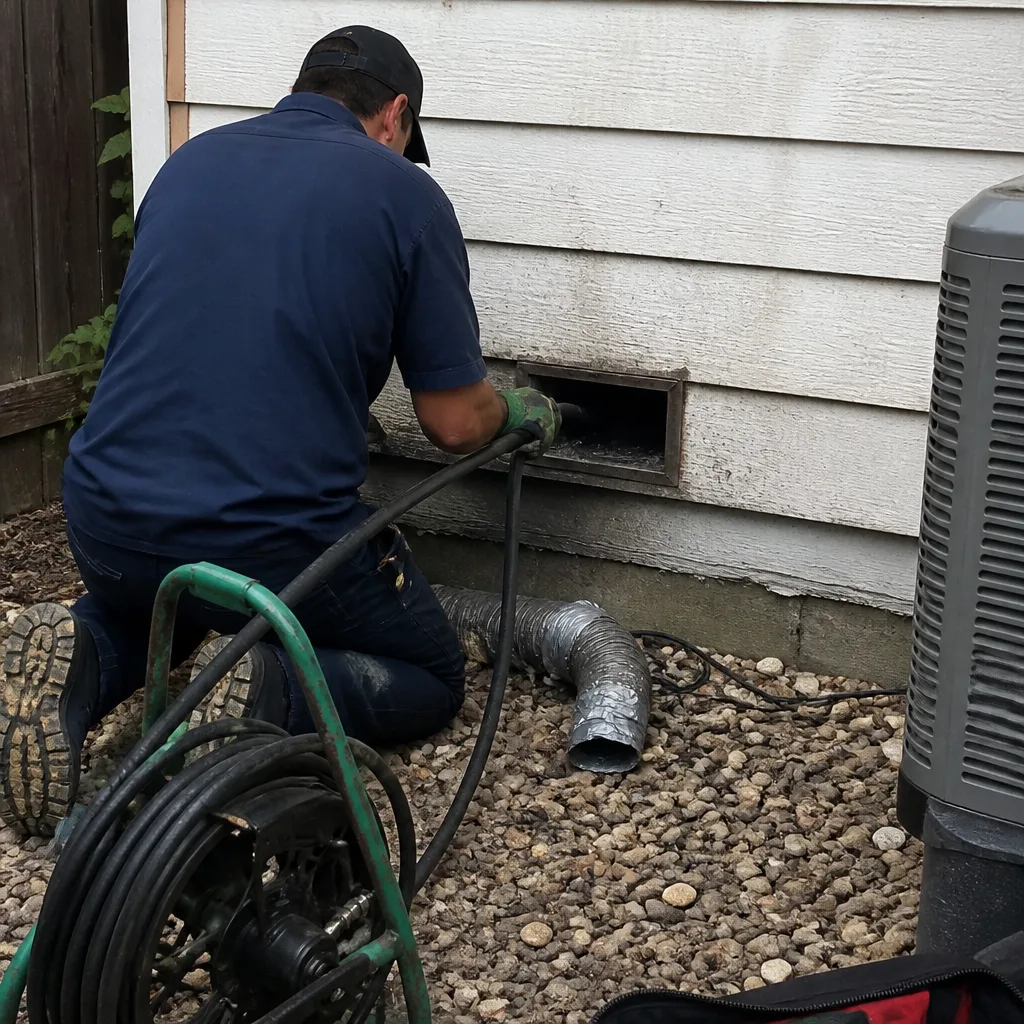
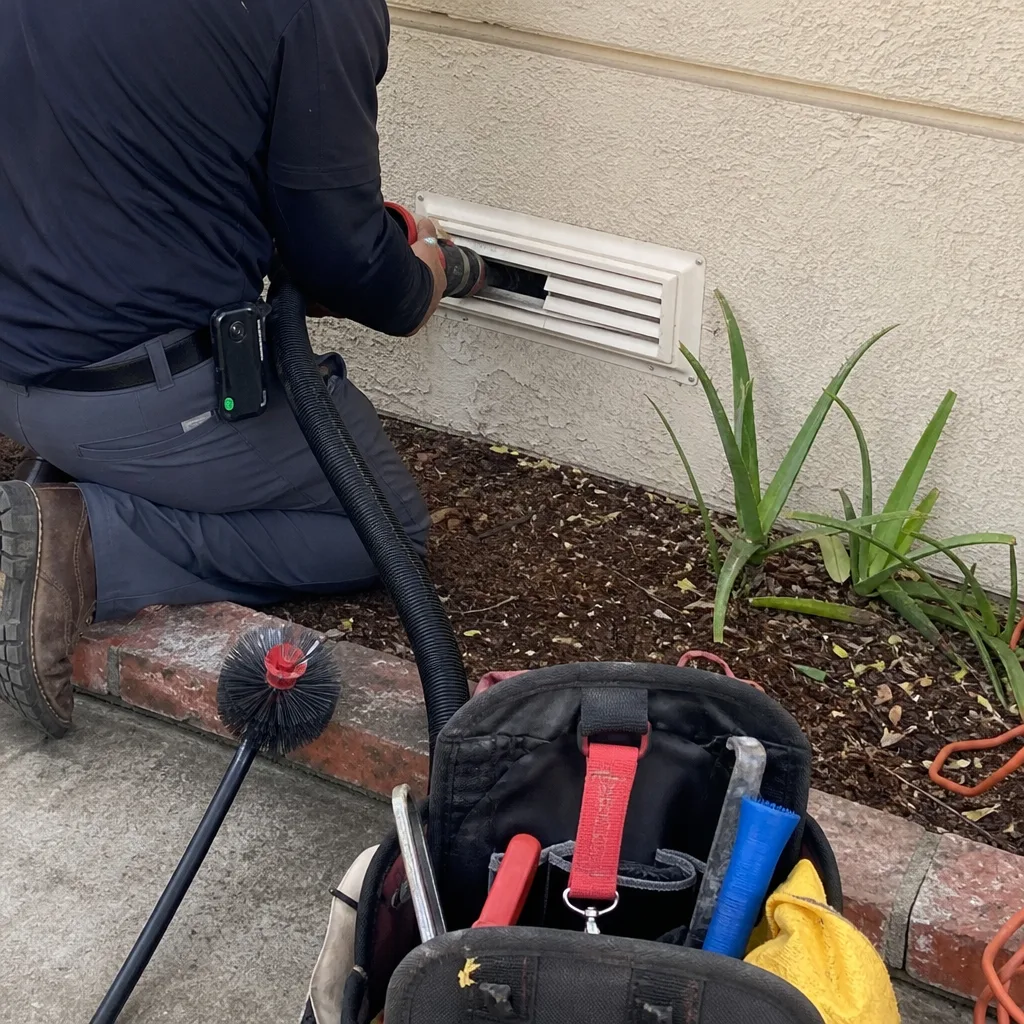
And cleaning is only part of the picture. Air duct repair in San Jacinto is sometimes required when seasonal conditions have damaged the system itself, whether that’s separated duct connections from temperature cycling, torn flex duct in attic runs, or damaged register boots. A company that can diagnose and repair in the same visit, rather than cleaning and flagging problems for someone else to fix, saves you a second call and a second service window. Likewise, dryer vent cleaning in San Jacinto is a seasonal issue in its own right. Spring and summer bring higher dryer use (swimsuits, towels, camping gear), and a clogged dryer vent is a fire hazard that no air duct cleaning service should ignore. The two systems are separate, but they share the same seasonal loading patterns, and homes that need one service frequently need both.
If you’re just starting to research this, the best place to orient yourself is our Duct Cleaning San Jacinto home page, which lays out the full scope of what a thorough, equipment-driven cleaning involves and when each seasonal trigger justifies a call.
Common Mistakes to Avoid
- Trusting the 3-5 year rule without checking your system. In the San Jacinto Valley, a single severe wildfire smoke season or a spring with heavy construction dust can load a duct system to the point that cleaning is needed years earlier than the generic guideline suggests.
- Changing the filter and assuming the ducts are fine. The filter catches what passes through it. It does not clean the duct walls, the coil, or the plenum. If your filter is loading fast, the ducts are also loading, and the filter is not solving that.
- Ignoring a musty smell when the AC first cycles. That smell is often biological material on the coil and in the adjacent ductwork, and it does not improve with time. It compounds with each cooling season.
- Treating dryer vent cleaning as an afterthought. Dryer vents load with lint on a different cycle than ductwork, and the fire risk is real. If you’re evaluating seasonal maintenance, include the dryer vent as its own line item, not a footnote.
- Hiring based on price without knowing the equipment. A low quote often means no mechanical agitation, no HEPA extraction, and a technician who spends 45 minutes vacuuming the first few feet of duct you can see. You pay less, and you get less, and the ducts still hold what they held before.
- Waiting until smoke season is over to think about smoke damage. Smoke particulate that sits in ducts for months bonds to duct surfaces and becomes harder to remove. The sooner after a major smoke event you evaluate the system, the more complete the cleaning.
- Skipping duct repair when it’s flagged. Clean ducts with separated connections or torn flex runs still leak conditioned air into the attic and pull dust into the system. Cleaning and repair go together when the system is damaged.
When to Call a Professional
Call a professional when your seasonal inspection rhythm produces a signal you can’t resolve with a filter change: persistent musty odor during cooling, visible dust on surfaces after the first heating cycles, filter loading that jumps from 90 days to under 30 days, or the return registers showing film you can’t keep up with. These are system-level indicators, not filter issues. Call a professional if you have lived through a San Jacinto wildfire smoke event since your last cleaning and you have not had the ducts inspected. Call a professional if you are near active construction and have noticed dust accumulation you cannot trace to normal household sources. Call a professional if you have never had the ducts cleaned in the home you currently live in, regardless of how long you have owned it. Duct Cleaning San Jacinto offers free estimates in San Jacinto. Call (866) 569-6948 to schedule an assessment. You’ll get a straight answer about what’s in your ducts and whether cleaning is warranted right now or can wait.
Frequently Asked Questions
In San Jacinto, most homes benefit from duct cleaning every 2-4 years, though costs vary by home size and contamination level – see our Air Duct Cleaning Cost Breakdown: The San Jacinto Homeowner’s Reference for 2026 – with the interval compressed by specific events: a significant wildfire smoke season, a construction project on or near the property, or persistent musty odor during cooling. A fixed 5-year interval ignores how fast valley conditions can load a system, and some homes with heavy exposure need cleaning more frequently.
Yes. Smoke particulate penetrates through door seals, window frames, ventilation points, and any gap in the building envelope, and once inside, the return air stream pulls it into the duct system. Closed windows reduce the load but do not eliminate it. Homes in San Jacinto that experienced the 2020 or 2022 smoke events should assume some smoke residue entered the system and have it evaluated.
Professional systems use mechanical agitation to scrub the interior duct surfaces, combined with HEPA-filtered negative air extraction to capture and remove loosened material. A shop vac has neither the reach to access the full duct run nor the filtration to capture fine particulate like smoke residue. The equipment difference determines whether the cleaning is complete or superficial.
You can remove visible dust from the first few feet of duct that you can reach, but you cannot access the full duct run, you cannot agitate material stuck to duct walls, and you cannot capture fine particulates without HEPA filtration. Most importantly, you cannot inspect the system for damage or biological growth. Professional cleaning addresses the full system, not just the visible portion.
Filter changes reduce the rate at which new particulate enters the system, but they do not remove material already in the ducts, on the coil, or in the plenum. In San Jacinto, where seasonal events like smoke and wind-driven dust load systems heavily, even diligent filter maintenance cannot prevent accumulation. The filter and the duct cleaning serve different functions.
The short answer is that an inspection determines the difference. Weak airflow at distant registers, visible separation at accessible duct joints, or dust entering rooms from the supply side can indicate duct damage rather than just dirt. A company that offers both cleaning and repair can diagnose the issue accurately and resolve it in a single visit, rather than cleaning a system that needs repair or repairing a system that also needs cleaning.
The Bottom Line
San Jacinto’s climate gives you four distinct seasonal threats to duct system integrity, and none of them are addressed by a generic every-few-years cleaning schedule. Summer heat compounds biofilm growth on coils. Fall wildfire smoke can load a system in days. Winter inversions trap particulates that recirculate during heating cycles. Spring construction and wind events deposit dust faster than any other season. The solution is a seasonal inspection rhythm built on register airflow checks and filter loading rates, combined with professional cleaning that uses real agitation and extraction equipment. When your system shows the signals described in this guide, call (866) 569-6948 for a free estimate. The alternative is letting another season pass through a system that’s already carrying more than it should.
Written by the team at Duct Cleaning San Jacinto, serving San Jacinto since 2015. For more guides & resources, visit our blog.
See the difference
 Before
 After
 Before
 After
 Before
 After