
Last updated November 2, 2026
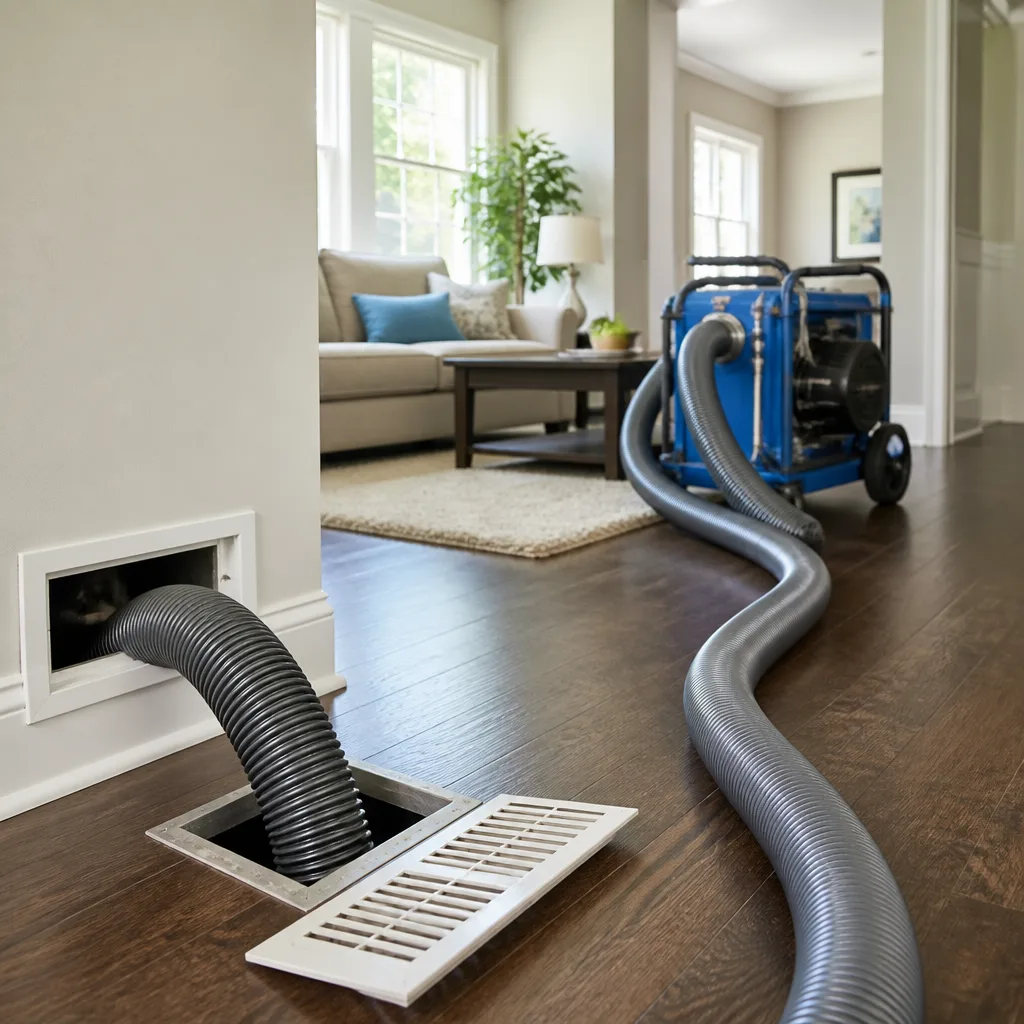 Whole-home duct cleaning
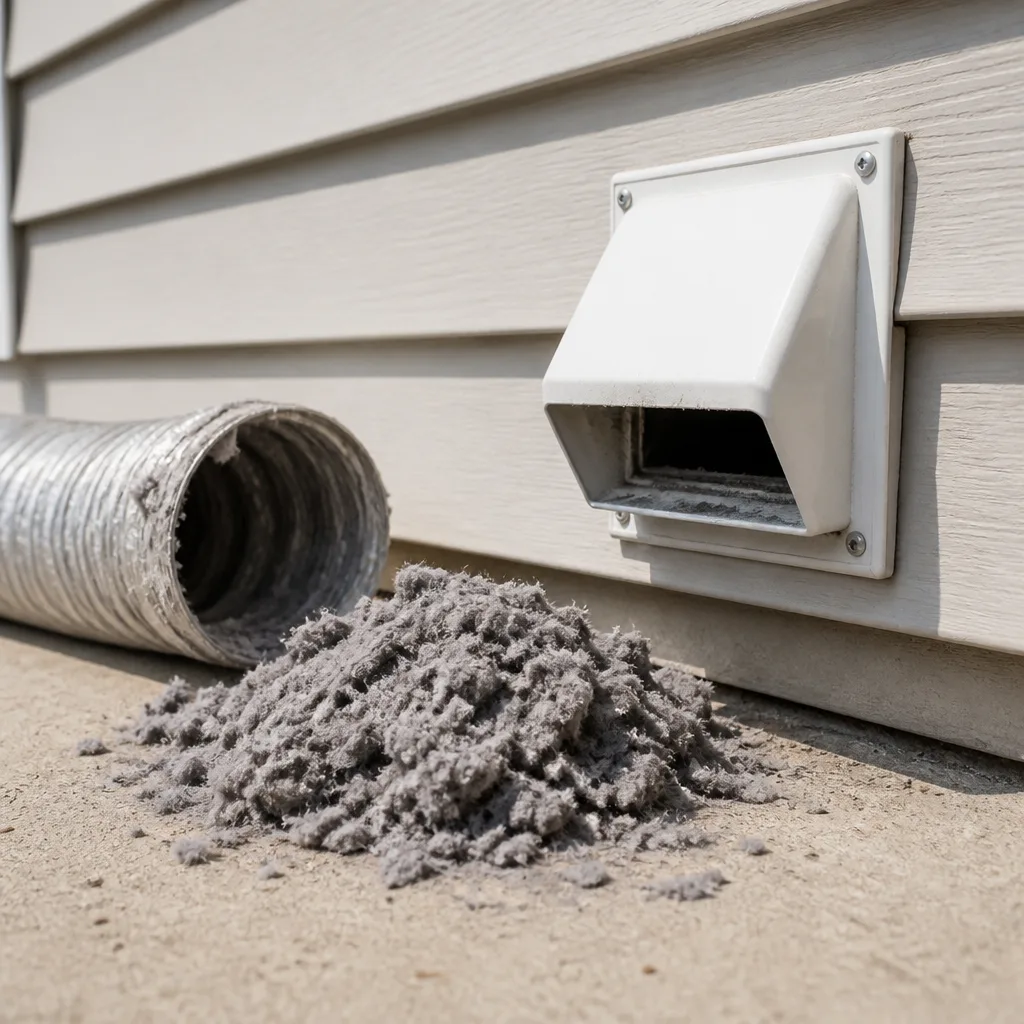 Dryer vent cleaning
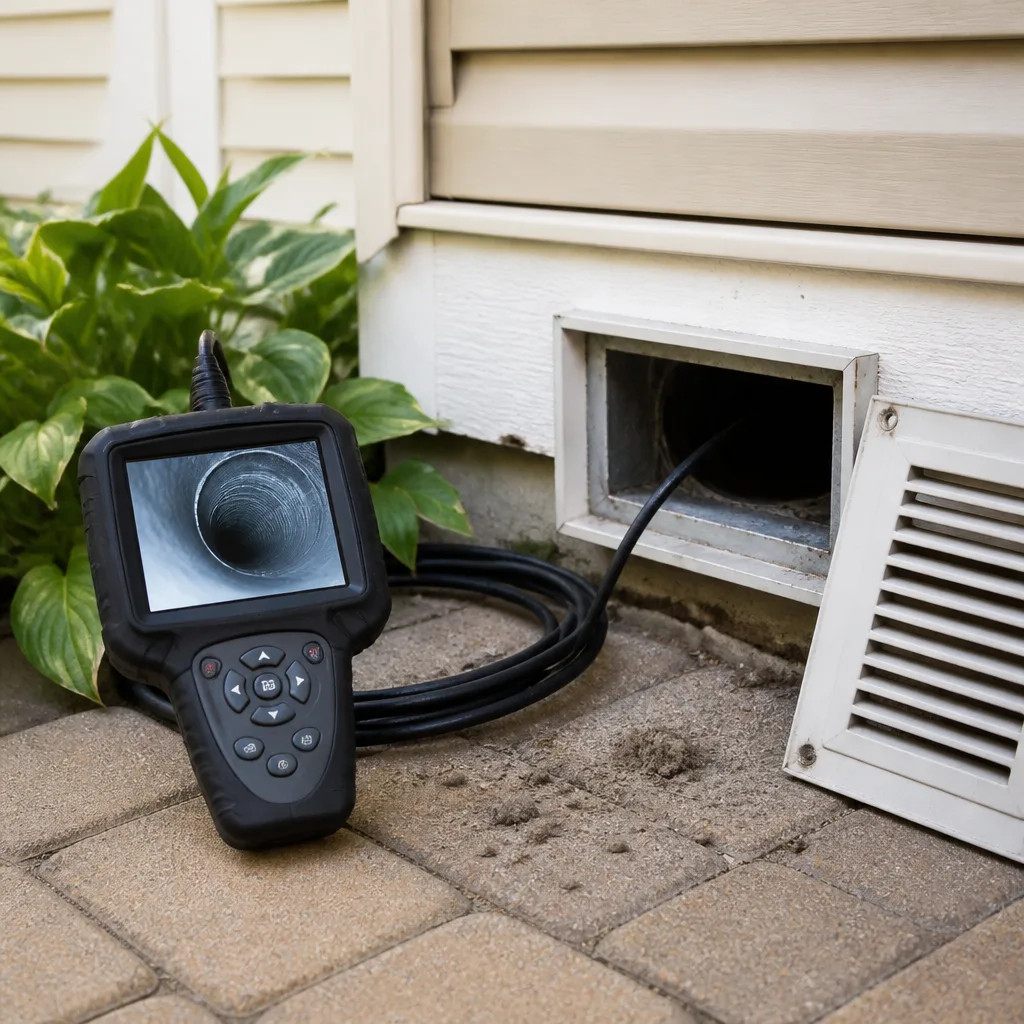 Camera inspection
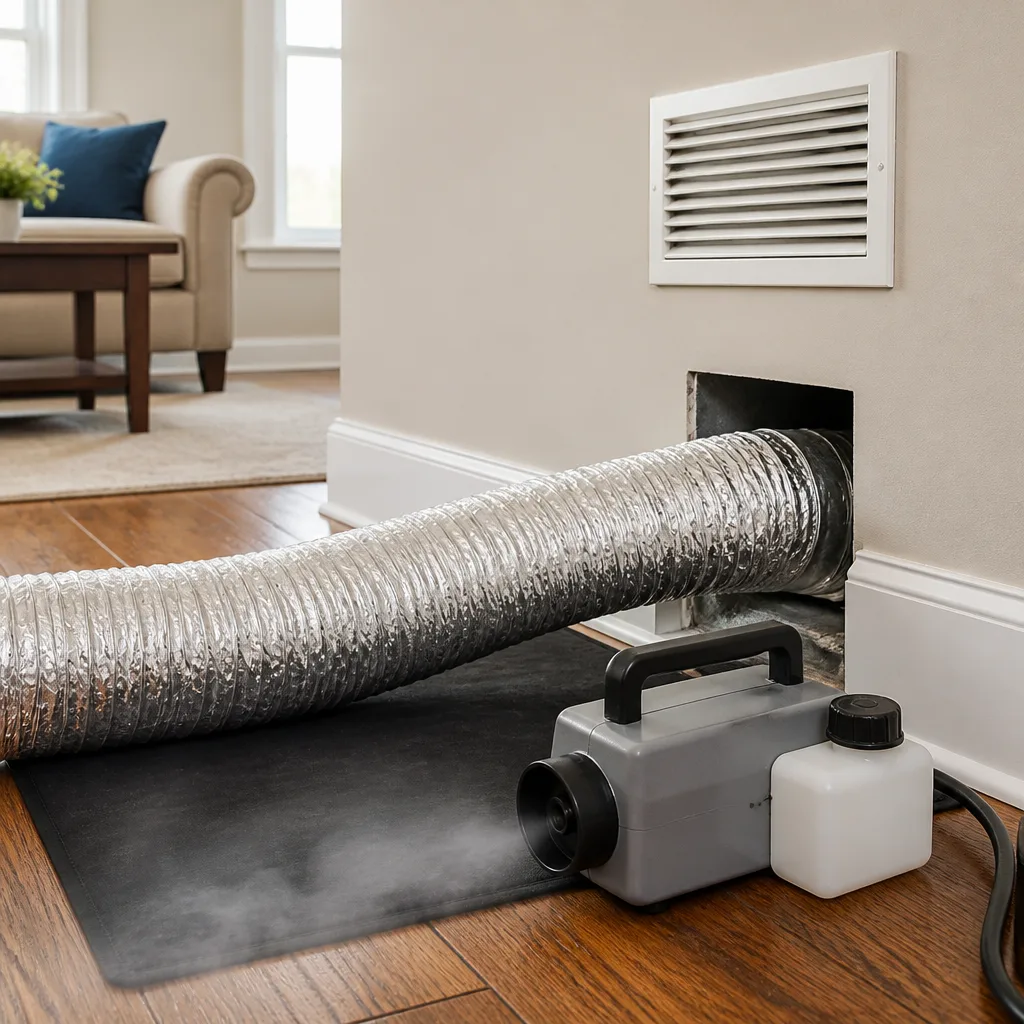 Sanitizing & deodorizing
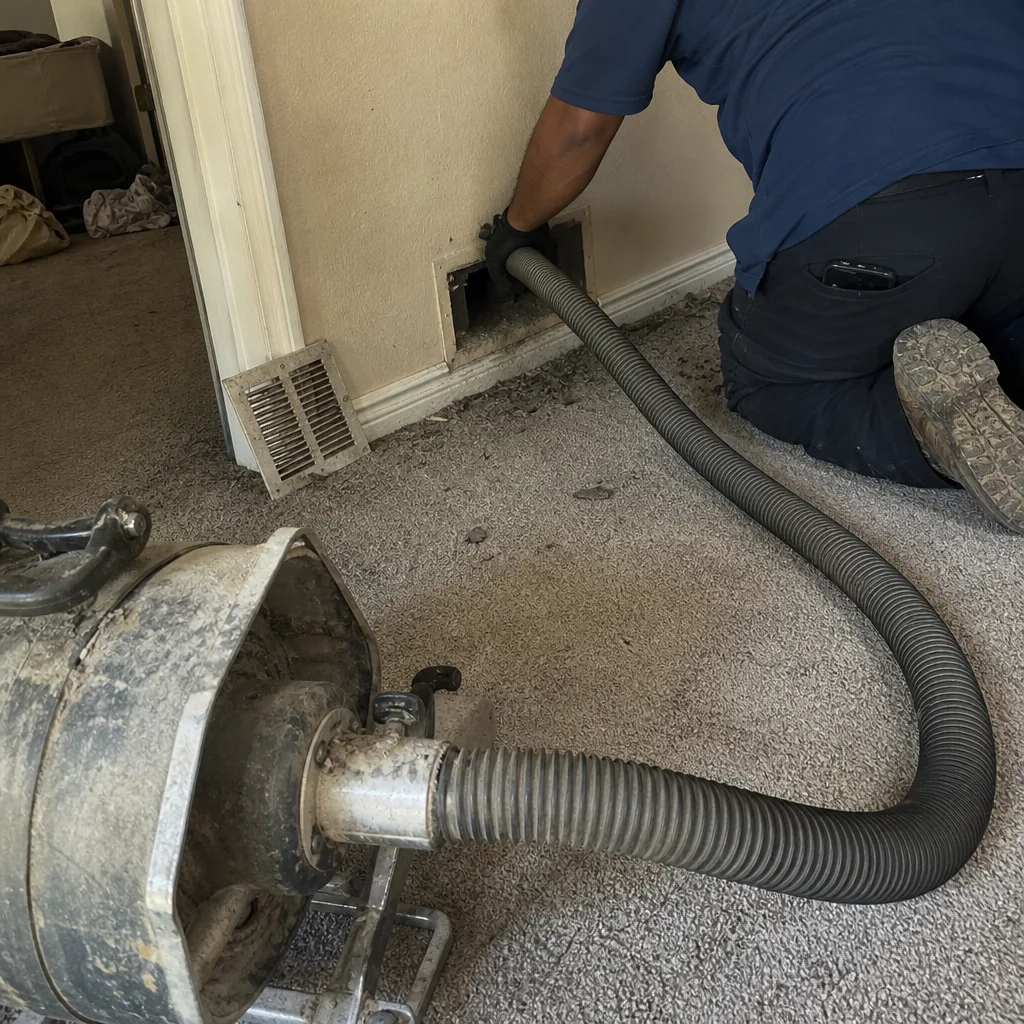
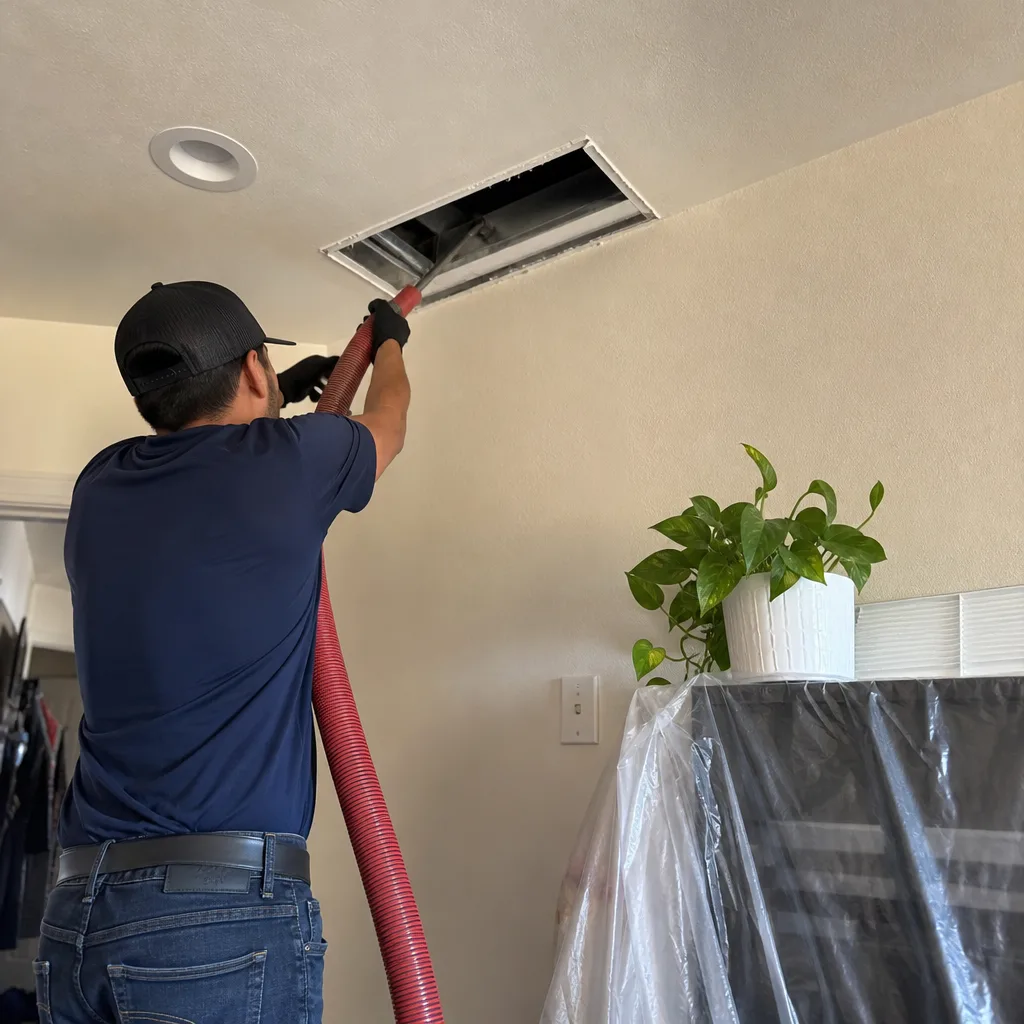
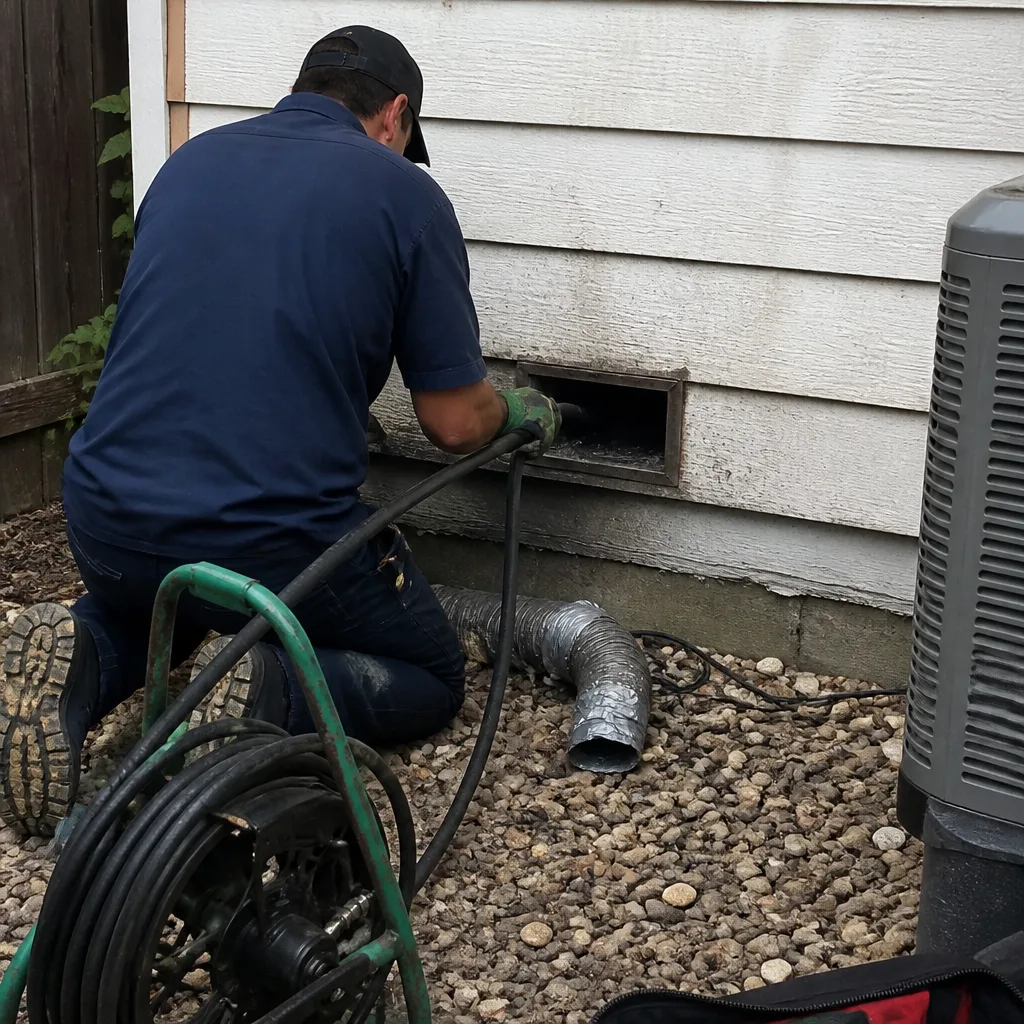
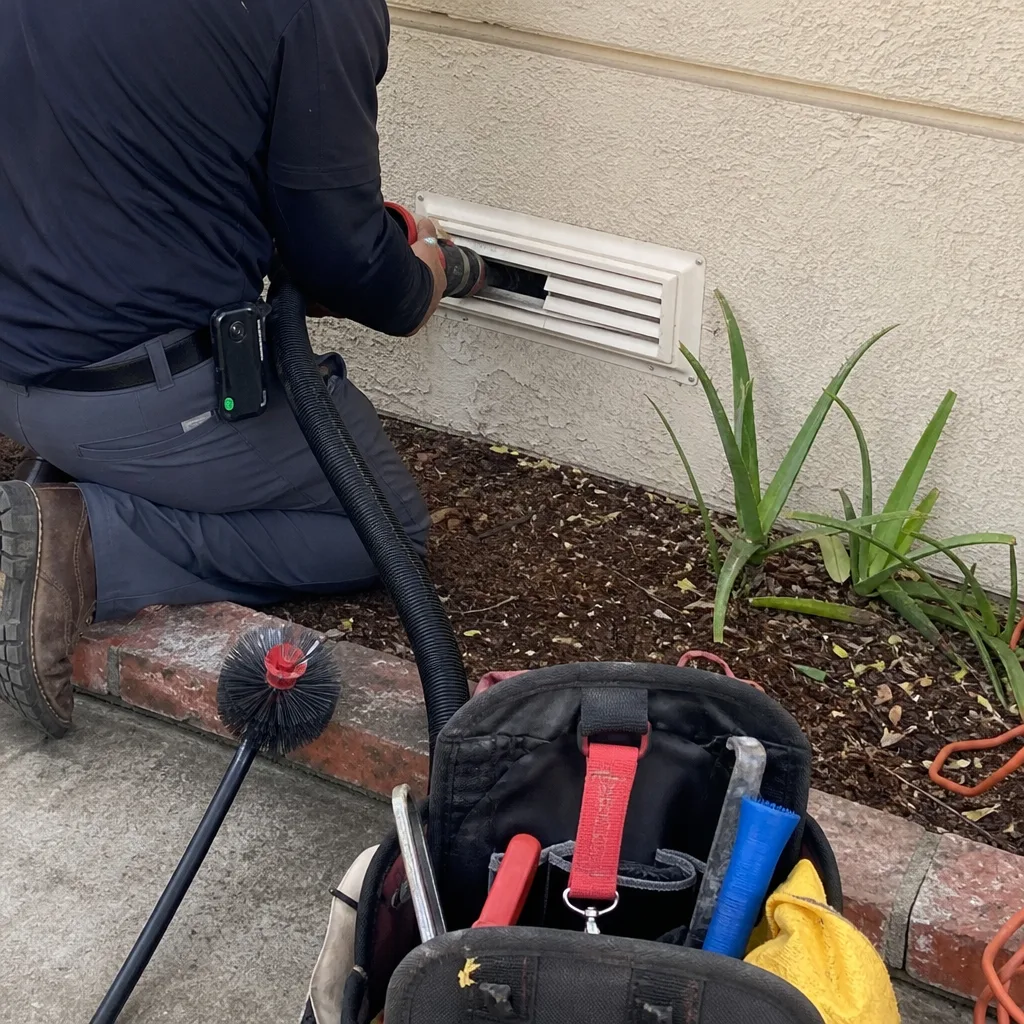
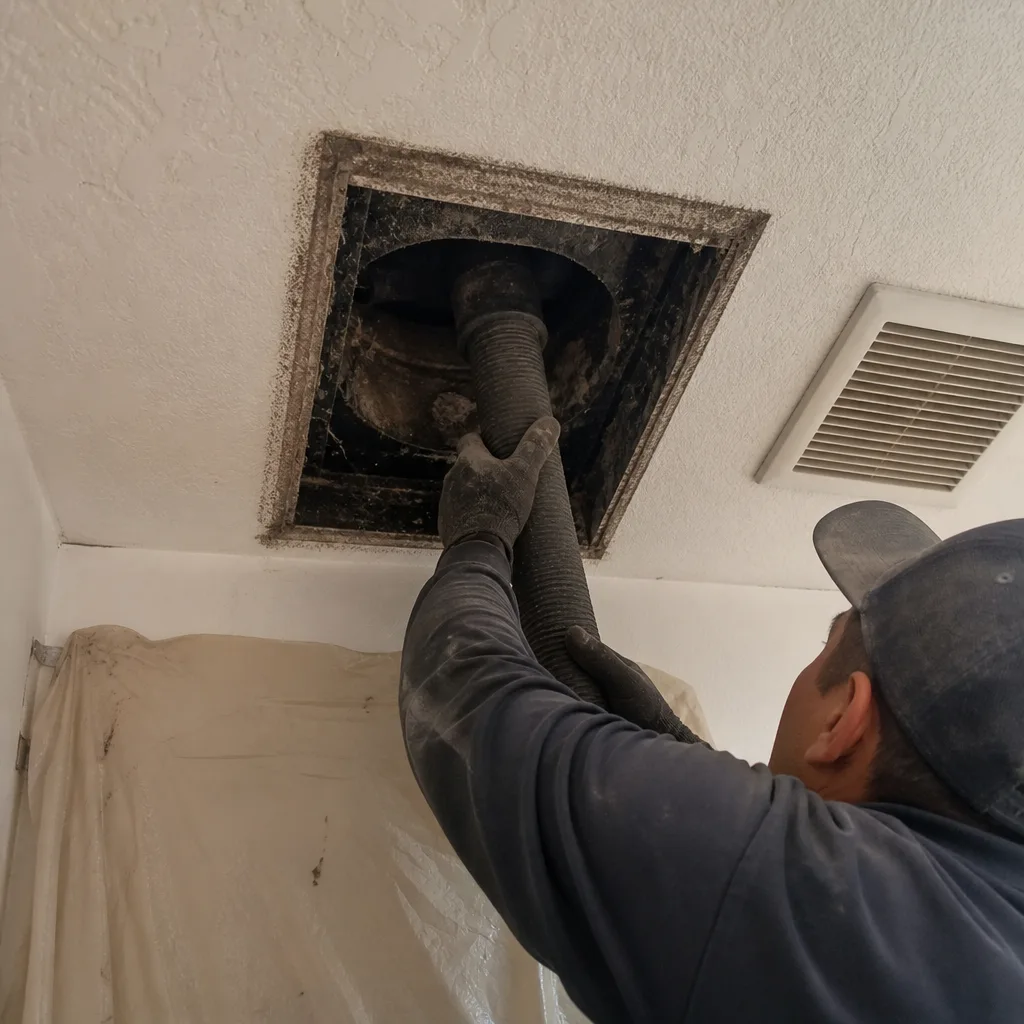
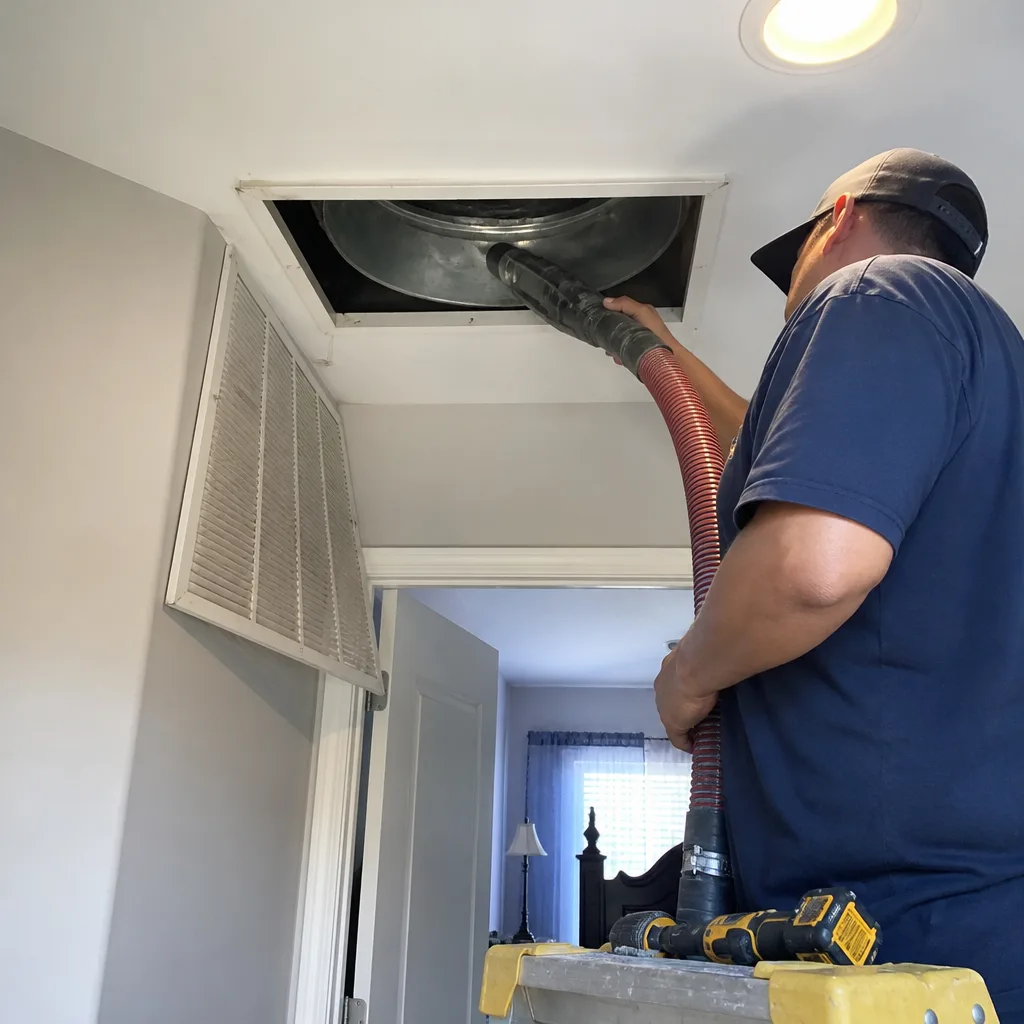
Whole-system duct and dryer vent check with before-and-after photos - you see exactly what came out of your vents
That "$99 whole-house special" is a bait ad - the real number appears once they are in your hallway, or the "clean" is a shop-vac at the register. We photograph the inside of your ducts before and after instead.
Air Duct Cleaning Permits, Codes & Inspections in CA: What You Need to Know
Most San Jacinto homeowners assume that anything involving ductwork automatically requires a permit. The reality is more nuanced, and that nuance can cost you real money at closing. Our Air Duct Cleaning services sit firmly in the maintenance category under California law – no permit, no inspection, no filing. But the line moves the moment a contractor starts resealing trunk lines, replacing a rusted section, or wiring a UV lamp inside your air handler. A courtesy add-on during an otherwise routine cleaning can quietly become an unpermitted HVAC modification that surfaces years later. We’ve watched this exact scenario unfold in Hemet and San Jacinto escrows, and it’s almost always avoidable with a five-minute conversation before the work begins.
This guide and our Air Duct Cleaning Troubleshooting: Common Problems and How to Fix Them explain exactly where California draws the permit line for duct work, which codes actually apply, what inspectors look for, and what questions to ask any contractor before they touch your system. You’ll finish with a clear decision framework, not a vague warning.
Quick Answer
Routine air duct cleaning requires no permit anywhere in California, including San Jacinto and Riverside County. The permit trigger is modification: replacing duct sections, resealing connections, adding UV or electronic air cleaning equipment, or altering the system’s airflow design. If a contractor touches anything beyond cleaning the interior surfaces of existing ducts, ask for the scope of work in writing before they start – it’s the single most effective way to avoid an unpermitted HVAC modification.
Styles & brands we work with
- Whole-home duct cleaning
- Dryer vent cleaning
- Camera inspection
- Sanitizing & deodorizing
Table of Contents
- Cleaning vs. Modification: Where California Draws the Line
- Title 24 and Duct Sealing: What the Energy Code Actually Requires
- UV Light Installation: The Electrical Permit Most Contractors Skip
- Riverside County & San Jacinto: Local Enforcement Reality
- When Remediation Changes the Rules: Mold, Asbestos, and Clearance Reports
- Questions to Ask Before Anyone Touches Your Ductwork
- Common Mistakes to Avoid
- When to Call a Professional
- Frequently Asked Questions
Cleaning vs. Modification: Where California Draws the Line
The California Building Standards Code doesn’t have a single permit category called “duct work.” Instead, permit requirements flow from the nature of the work. Cleaning is defined as maintenance: you’re removing accumulated debris, dust, and microbial growth from interior surfaces of existing ducts, registers, and air handlers. The system’s structure, design, and connections remain untouched. In San Jacinto, as in every California municipality, maintenance work falls outside the scope of the California Mechanical Code’s permit requirements.
Modification is different. Any of these trigger a mechanical permit:
- Replacing a section of duct, even a short damaged run
- Resealing or reconnecting trunk lines, branch connections, or plenum joints
- Installing new registers, diffusers, or zoning dampers
- Adding or relocating a supply or return run
- Installing UV germicidal lamps, electronic air cleaners, or whole-home humidifiers
- Upgrading or relocating the air handler in a way that changes duct connections
The practical problem: some contractors frame small modifications as “part of the cleaning.” A detached flex run gets reattached. A loose trunk connection gets resealed. The homeowner never knows a code-triggering repair happened. Two years later, an escrow inspection flags the work, and suddenly the seller is paying for retroactive permits, inspection fees, and possibly corrective work before closing can proceed.
Our position at Air Duct Cleaning in San Jacinto is that cleaning means cleaning. We don’t convert a cleaning into an unpermitted repair. If we find damage during a cleaning – and we do, regularly – we photograph it, document it, and walk the homeowner through exactly what’s needed. When a repair falls within our Air Duct Repair in San Jacinto scope, we address the permit question before doing anything. That honesty matters more than the convenience of a free add-on.
Title 24 and Duct Sealing: What the Energy Code Actually Requires
California’s Title 24, Part 6 – the state Energy Code – quietly governs a lot of duct work that has nothing to do with cleaning. If any duct modification occurs on a home built after 2005, the work must meet the code’s duct sealing and leakage verification standards. This isn’t optional. It’s not a local preference. It’s state law, and it applies to San Jacinto homes exactly as it applies in Sacramento or San Diego.
The relevant requirements for any duct work performed in post-2005 construction:
- All duct connections and joints must be sealed with mastic or UL-approved tape – not standard gray duct tape, which fails within years in Riverside County’s heat.
- Duct leakage must not exceed 6% of system airflow – verified by a duct leakage test where required by the local enforcement agency.
- Ducts in unconditioned spaces – attics, crawlspaces – must meet specific R-value insulation requirements. In San Jacinto’s summer attic temperatures, which routinely exceed 130°F, this insulation isn’t a comfort suggestion, it’s an energy-survival requirement.
- A duct system that’s modified must not create air balance problems that strain the equipment.
Some HVAC contractors won’t touch a post-2005 home’s ducts without a HERS (Home Energy Rating System) verifier on the project. Others will do the work and quietly skip the verification. In our experience, the difference is almost invisible to a homeowner until it surfaces in a disclosure. A systematic company documents the compliance path up front. That’s one reason we use professional-grade equipment like our Rotobrush rotary brush system and Nikro HEPA-filtered vacuum units on every job – we’re built around documented, verifiable process, not improvisation.
UV Light Installation: The Electrical Permit Most Contractors Skip
Homeowners increasingly ask about UV germicidal lights, and for good reason – properly installed UV-C systems reduce microbial growth on coil surfaces. But here’s what most contractors won’t volunteer: installing a UV lamp inside your air handler is an electrical permit job in most California jurisdictions, including Riverside County.
The lamp requires a hardwired or dedicated-circuit electrical connection. That’s not a plug-in accessory; it’s a code-covered electrical modification. Many HVAC and duct contractors install UV systems without pulling an electrical permit, either because they don’t know it’s required or because they don’t want the delay an inspection creates. The result: an unpermitted electrical modification inside your air handler, invisible to the homeowner, that surfaces during a home sale or insurance claim.
In San Jacinto, the practical rule of thumb is simple:
- If the UV lamp plugs into an existing 120V outlet inside the cabinet – no permit required.
- If the installation means running new wire, adding a circuit, or hardwiring to the air handler’s power – an electrical permit is required, and the installing contractor should pull it.
We don’t install UV systems. But when homeowners ask, we refer them to licensed electricians who handle the electrical permit properly. That’s the difference between a contractor who protects you and one who protects his schedule. Our work is cleaning – Duct Cleaning San Jacinto home scope stays on the maintenance side of the code line deliberately, because that’s where homeowners get honest service without hidden compliance risk.
Riverside County & San Jacinto: Local Enforcement Reality
State code sets the rules; the local Authority Having Jurisdiction (AHJ) enforces them. In Riverside County, that’s typically the county Building & Safety Department for unincorporated areas, and the City of San Jacinto’s Building Division for properties inside city limits. Enforcement styles differ.
What we’ve observed in San Jacinto specifically:
- The City’s permit records are checked more often during residential resale than many homeowners expect. Unpermitted HVAC work is a recurring escrow finding.
- San Jacinto’s hot, dry climate accelerates duct degradation – flex duct connections loosen as the polymer collars expand and contract through summer-winter cycles. Loose connections are a top cause of energy loss in local homes, and a top reason modification work sometimes happens during a cleaning visit.
- Homeowners in older San Jacinto neighborhoods – with homes built in the 1970s and 1980s – frequently have systems that have never been substantially modified. Those systems fall outside most Title 24 triggers because the code applies prospectively. But any modification, even on an older home, requires a mechanical permit if the work changes duct connections.
- Riverside County’s inspection backlog fluctuates. A contractor who submits a permit can expect days-to-weeks for scheduling, not hours. This reality is exactly why some companies skip permitting – they know the homeowner won’t discover it until later.
The takeaway isn’t to fear permits. It’s to know the difference between maintenance and modification, and to document everything. A homeowner who requests and receives a written scope of work before a cleaning is protected in ways that verbal assurances never deliver.
When Remediation Changes the Rules: Mold, Asbestos, and Clearance Reports
Air duct cleaning is preventive maintenance. Remediation is environmental work, and California regulates it differently. When visible mold growth is identified inside ducts or the air handler, the job crosses from cleaning to remediation. The same is true when a home built before 1980 has asbestos-containing duct wrap that’s deteriorating. Here’s what changes:
- Containment: Abatement Technologies-grade containment and HEPA air scrubbing become the operational standard. A shop-vac doesn’t meet the bar. Professional remediation protocols require negative-pressure isolation of the work area and verified filtration. This is equipment we maintain and use when a job crosses into higher-contamination territory.
- Industrial hygienist involvement: For significant mold remediation, California industry practice – and in many cases, lender or insurance requirements – call for a third-party industrial hygienist to conduct post-remediation verification (PRV). That means the remediation contractor does the work; an independent hygienist tests to confirm the environment is clean. The clearance report is the legal documentation that protects the homeowner in a future sale.
- The duct cleaning connection: After remediation, duct cleaning is often specified as a final step to remove residual particulate from the system. The combination is common in San Jacinto homes that have experienced water damage or prolonged humidity exposure, although San Jacinto’s dry climate makes severe mold less common than in coastal cities.
- When cleaning is not enough: If microbial growth has penetrated the insulation inside a duct run, cleaning can’t fix it. The affected section needs replacement – which triggers the mechanical permit conversation we covered earlier.
In our work, we’re clear-eyed about what cleaning can and can’t accomplish. A Guardsman-grade cleaning protocol protects duct surfaces during service. But when the issue is active mold growth or fibrous asbestos wrap, the responsible answer is containment and remediation – not a promise that a rotary brush will solve it.
Questions to Ask Before Anyone Touches Your Ductwork
The simplest protection against unpermitted work is a written scope of work. In San Jacinto, as anywhere in California, asking these seven questions before the job starts separates professional operators from trunk-slammers:
- Will this work change, repair, or replace any duct connections, runs, or fittings? If the answer is yes, ask whether a mechanical permit is required and who will pull it.
- Do you use professional-grade agitation and extraction equipment, or a shop-vac and brushes? Equipment quality is a proxy for professionalism. We run Rotobrush rotary brush systems and Nikro HEPA-filtered vacuums on every cleaning – the gear does the hard work, not a technician improvising.
- Will you provide a written scope of work before starting? A contractor who won’t put the work in writing is signaling a problem. Every legitimate company will.
- If you find damage during cleaning, what happens next? The answer should include: photos, a written description, a recommendation, and no unpermitted repairs. We document exactly this way.
- Is your work compatible with whole-home air quality platforms like Honeywell or Aprilaire? Integrated IAQ systems need techs who understand system-level operation, not just isolated ductwork. Our team supports these platforms because that’s what professional equipment demands.
- Do you handle dryer vent cleaning as a dedicated service? Dryer vents are a fire-safety issue in San Jacinto’s dusty climate. They deserve focused attention, not an upsell afterthought. Our dedicated Dryer Vent Cleaning in San Jacinto service treats this as its own discipline.
- What documentation will I receive after the job? Before-and-after photos, a service summary, and honest notes on any issues found. A professional provides these without being asked.
Common Mistakes to Avoid
- Accepting a “courtesy repair” during a cleaning. The courtesy is often an unpermitted modification – one that can surface during a home sale and cost far more than the repair was worth. In San Jacinto’s active resale market, this is the most common HVAC-related escrow surprise.
- Hiring the lowest bidder without checking equipment. A company running a truck-mounted vacuum with a rotating brush may be fine. A company running a shop-vac through your registers is not. The difference is visible in the results and in the time the job takes.
- Treating all contractors as if they understand code. Most duct cleaners know cleaning. Fewer know Title 24, mechanical permit triggers, and local AHJ enforcement. The questions section above filters for both.
- Installing UV equipment without verifying the electrical permit. Convenience here carries a hidden cost. If a contractor tells you no permit is needed, ask them to confirm in writing and check with the San Jacinto Building Division.
- Ignoring the dryer vent. San Jacinto’s dry, lint-producing laundry loads put real strain on dryer vents. A clogged vent is a fire hazard, not a maintenance inconvenience. Dedicated dryer vent cleaning is the honest fix.
- Assuming “mold in ducts” always means replacement. Sometimes it does; often it doesn’t. The issue is getting an honest assessment, not an up-sell. A cleaning company that identifies mold and immediately suggests remediation without supporting evidence is selling fear. A company that recommends third-party evaluation is protecting you.
- Not documenting before the work starts. Written scope, photos of the existing system, and a clear understanding of what the contractor will and won’t do: this is the homeowner’s insurance policy in any future dispute or disclosure.
When to Call a Professional
Call a professional duct cleaner when you see visible dust buildup at registers, when family members with allergies notice increased symptoms indoors, when you’ve completed a renovation without sealing off returns, or when your home simply hasn’t had its ducts cleaned in years. Call immediately when you notice reduced airflow, musty odors from vents, or visible mold growth on vent covers. And never ignore a dryer that takes two cycles to dry a load – that’s a dryer vent symptom with fire-safety implications. Duct Cleaning San Jacinto offers free estimates in San Jacinto – call (866) 569-6948.
Frequently Asked Questions
No. Routine air duct cleaning is classified as maintenance and requires no permit anywhere in California. The permit trigger is modification: replacing duct sections, resealing connections, installing UV or electronic equipment, or changing system design. Call (866) 569-6948 to discuss your specific situation.
No, not without a mechanical permit. Resealing or reconnecting duct runs is modification, not maintenance. A professional contractor will document the issue, explain the permit path, and let you decide. Any contractor who quietly handles it as a courtesy is creating an unpermitted modification that may surface later.
Any duct modification on a post-2005 California home must meet Title 24 sealing and leakage standards, including mastic or UL-approved tape, verified leakage rates, and proper insulation in attics and crawlspaces. San Jacinto’s hot attic environment makes proper sealing especially important.
It depends on the electrical connection. If the lamp plugs into an existing 120V outlet, no permit is required. If installation involves hardwiring, new circuits, or direct connection to air handler power, an electrical permit is required. Ask for written confirmation of the permit path before work starts.
If active mold growth is identified, the job crosses from cleaning to remediation. Professional remediation may require containment, HEPA filtration, and third-party industrial hygienist clearance. A responsible duct cleaner will recommend evaluation, not immediately sell remediation.
Every 3 to 5 years for most San Jacinto homes, more frequently if you have pets, recent renovation dust, or allergy-sensitive occupants. San Jacinto’s dry, dusty environment and summer attic heat accelerate particulate accumulation and duct degradation. (866) 569-6948 for a free estimate based on your home’s specifics.
The Bottom Line
Air duct cleaning in California requires no permit – but the line between cleaning and modification is where homeowners get hurt. The escrow-failing unpermitted HVAC work almost always starts as an undocumented “courtesy” during a routine service visit. Your protection is simple: a written scope of work, documented before-and-after condition, and a contractor who respects the line between maintenance and modification. See our more guides & resources for additional homeowner protection strategies. In San Jacinto, that’s what professional service looks like – whether it’s a thorough duct cleaning with commercial-grade Rotobrush and Nikro equipment, a dedicated dryer vent service, or honest guidance when repair or remediation goes beyond the cleaning scope.
Written by the team at Duct Cleaning San Jacinto, serving San Jacinto since 2015.
See the difference
 Before
 After
 Before
 After
 Before
 After