
Last updated November 2, 2026
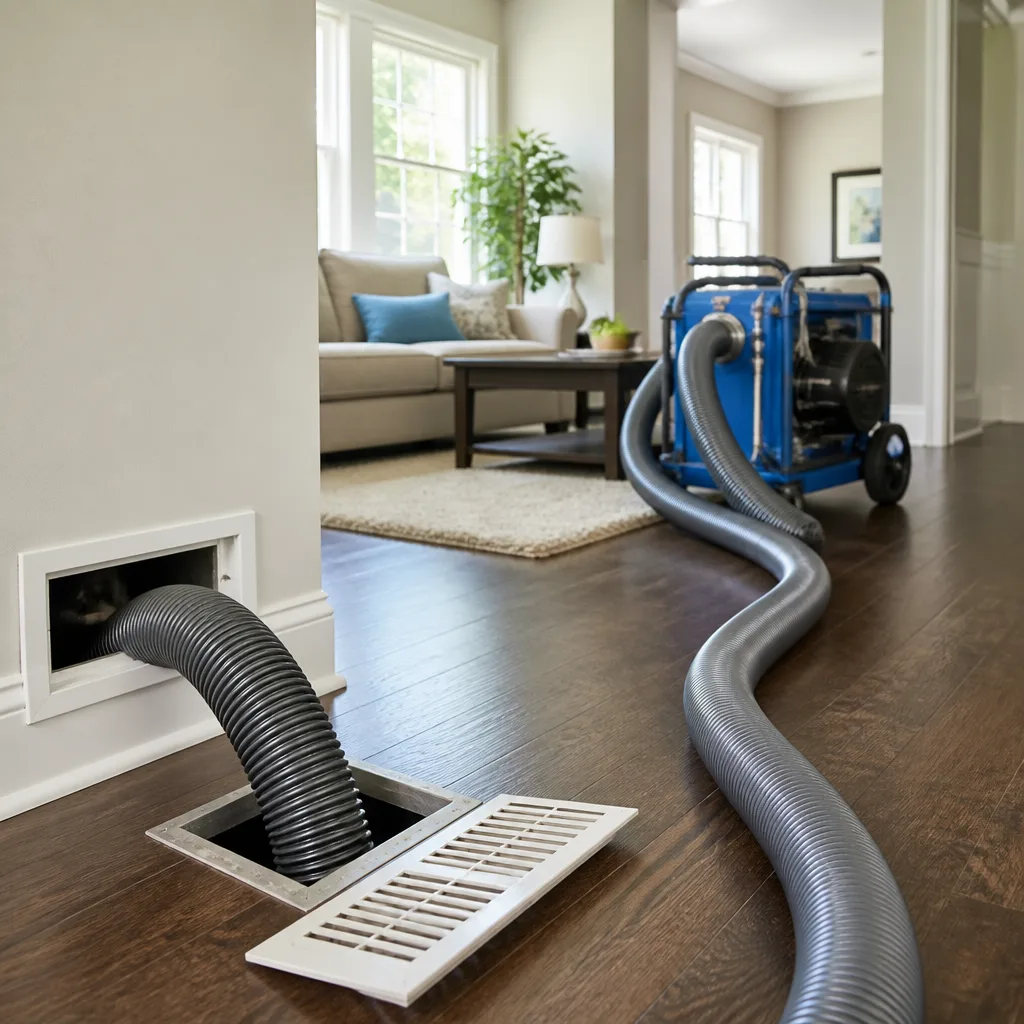 Whole-home duct cleaning
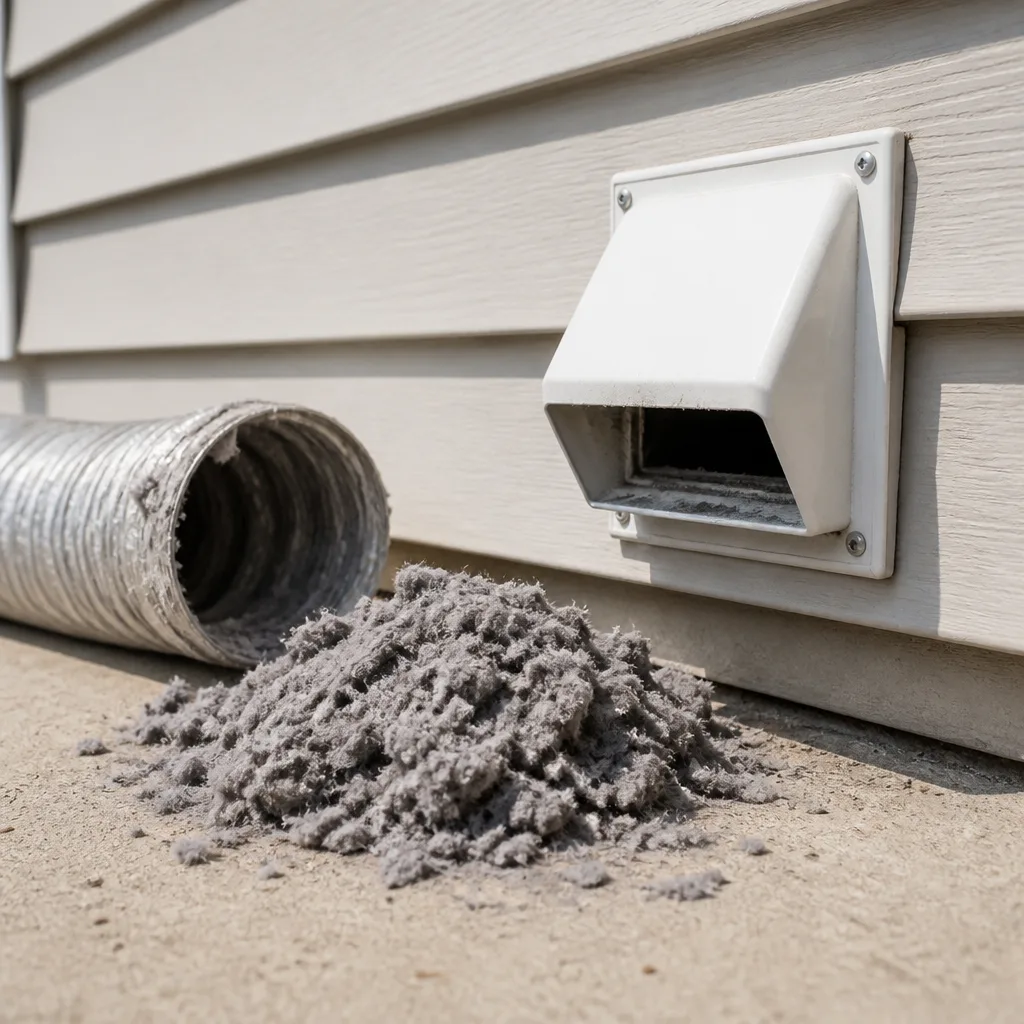 Dryer vent cleaning
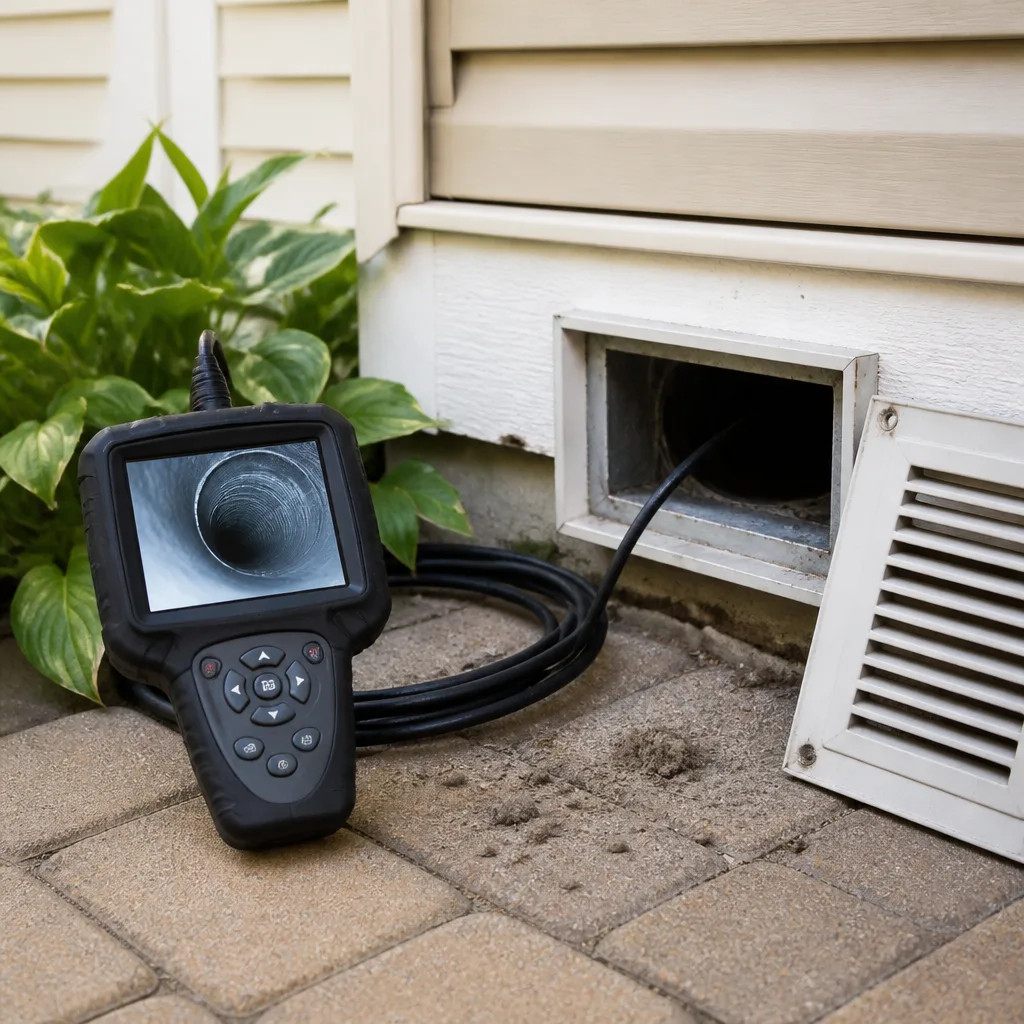 Camera inspection
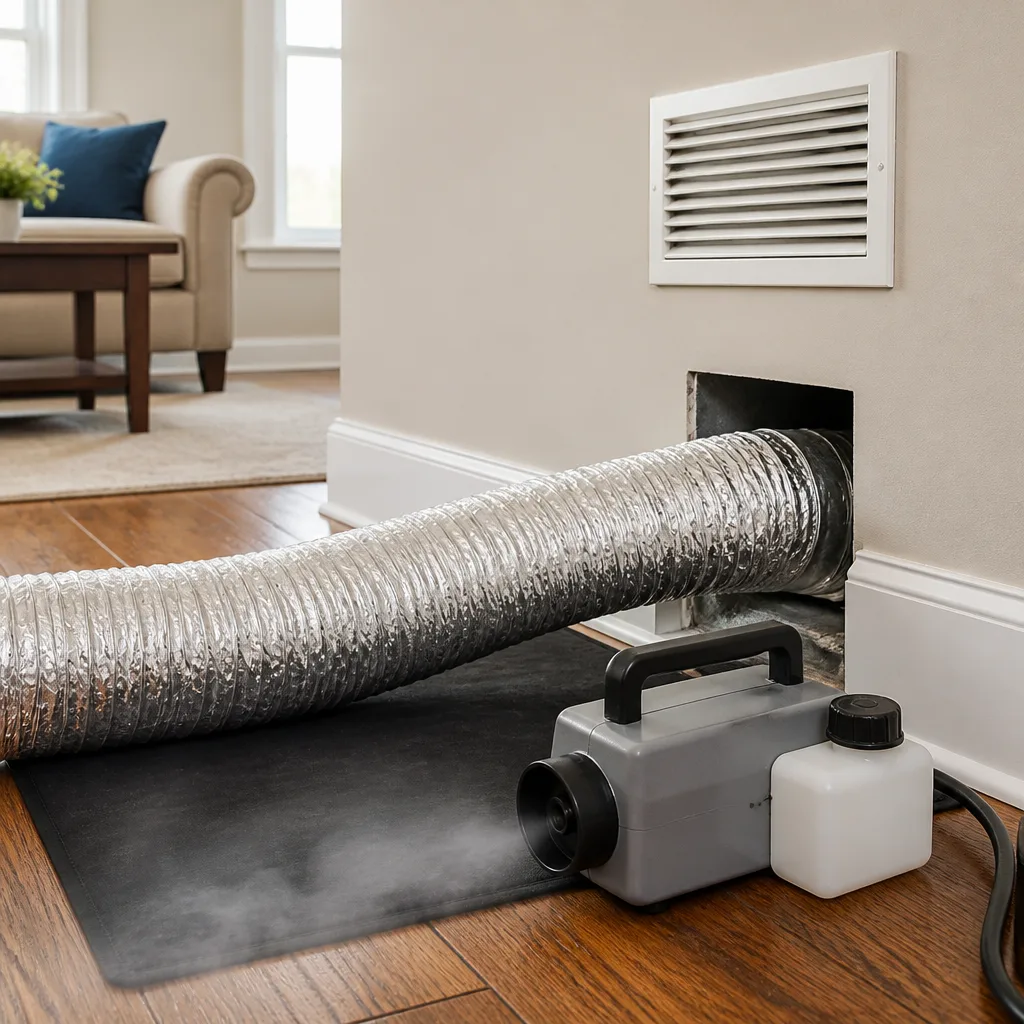 Sanitizing & deodorizing
Whole-system duct and dryer vent check with before-and-after photos - you see exactly what came out of your vents
That "$99 whole-house special" is a bait ad - the real number appears once they are in your hallway, or the "clean" is a shop-vac at the register. We photograph the inside of your ducts before and after instead.
DIY vs Professional Air Duct Cleaning: The San Jacinto Homeowner’s Decision Guide
A homeowner who vacuums their registers and calls it duct cleaning is doing the equivalent of dusting the vents on a car engine. It feels satisfying in the moment. It’s irrelevant to what’s actually downstream. And if that vacuuming loosened debris without capturing it, the home is now worse off than before. Here’s the honest truth most duct cleaning advice skips: the real dividing line between DIY and professional work isn’t effort or cost. It’s containment. Without negative pressure equipment pulling air toward a HEPA-filtered exhaust, any agitation of duct debris sends it into the living space you’re trying to improve. This guide explains exactly where the DIY ceiling is, why it exists, and what San Jacinto homeowners should realistically attempt on their own versus what genuinely requires professional-grade equipment.
Styles & brands we work with
- Whole-home duct cleaning
- Dryer vent cleaning
- Camera inspection
- Sanitizing & deodorizing
Quick Answer
DIY duct cleaning is appropriate for surface-level maintenance: washing register covers, vacuuming visible dust from boots and grilles, and keeping filters fresh. Anything deeper than the first few inches of ductwork requires negative pressure equipment that isn’t available in the consumer rental market. A professional cleaning using Rotobrush and Nikro systems costs more up front but prevents the most expensive DIY outcome: loosened debris redistributed through your San Jacinto home, requiring a second, more extensive cleaning to correct.
Table of Contents
- What a Homeowner Can Legitimately Do Without Professional Equipment
- Why Negative Pressure Is the Non-Negotiable Dividing Line
- When DIY Is Genuinely Appropriate, and When It’s Contradicted
- The Cost of Getting It Wrong: A Real ROI Calculation
- What the Rental Market Actually Offers, and What It Doesn’t
- What Professional Equipment Does That Rentals Can’t
- San Jacinto Climate Considerations and Duct System Stress
- Common Mistakes to Avoid
- When to Call a Professional
- Frequently Asked Questions
- The Bottom Line
What a Homeowner Can Legitimately Do Without Professional Equipment
Let’s start with what’s actually within reach. A homeowner in San Jacinto with standard household tools can clean the accessible surfaces of their HVAC system, and done consistently, this maintenance has real value. It reduces the dust load that enters the system, keeps airflow moving, and extends the interval between professional cleanings. Here’s a realistic breakdown of what each task accomplishes and where its ceiling sits:
- Register and grille washing: Remove floor, wall, or ceiling registers, wash them with warm water and mild soap, dry them fully, and reinstall. This removes surface dust and grime that otherwise gets pulled into the duct. Impact ceiling: entirely cosmetic and surface-level. It does nothing for the 20 to 30 feet of duct behind the register.
- Vacuuming register boots: Using a standard household vacuum with a crevice tool, you can reach 6 to 12 inches into the boot where it meets the drywall or flooring. This removes loose surface dust at the entry point. Impact ceiling: negligible for actual duct length, but it does prevent visible dust from being drawn in.
- Dryer vent brush-out: A homeowner can purchase a dryer vent brush kit with flexible rods for roughly $25 to $40 at any hardware store in San Jacinto. Running this brush into the first few feet of a dryer vent removes lint accumulation near the exit point. Impact ceiling: limited to short, straight vent runs. Any 90-degree elbow or run longer than 8 to 10 feet exceeds what a hand brush can meaningfully clear without risking the rod snapping inside the vent.
- Filter system optimization: This is the highest-value DIY task and the one most San Jacinto homeowners skip. Choosing the correct filter for your system (MERV 8 to 13 for most residential units), checking it monthly, and replacing it every 60 to 90 days does more for air quality than any register cleaning. Impact ceiling: won’t clean existing duct buildup, but it stops new debris from entering the system. For homes with Honeywell or Aprilaire whole-home air quality platforms, this is the foundation those systems are designed to work with.
The pattern here is consistent: DIY tasks clean what you can see. They do not clean what you can’t. In a typical San Jacinto home with 15 to 25 registers and hundreds of feet of ductwork, accessible surfaces represent maybe 2 to 3 percent of the total interior surface area. The other 97 to 98 percent is behind the walls, in the attic, or under the slab.
Why Negative Pressure Is the Non-Negotiable Dividing Line
The single technical feature that separates professional duct cleaning from every DIY attempt is negative pressure. Here’s how it works, why it matters, and what goes wrong without it:
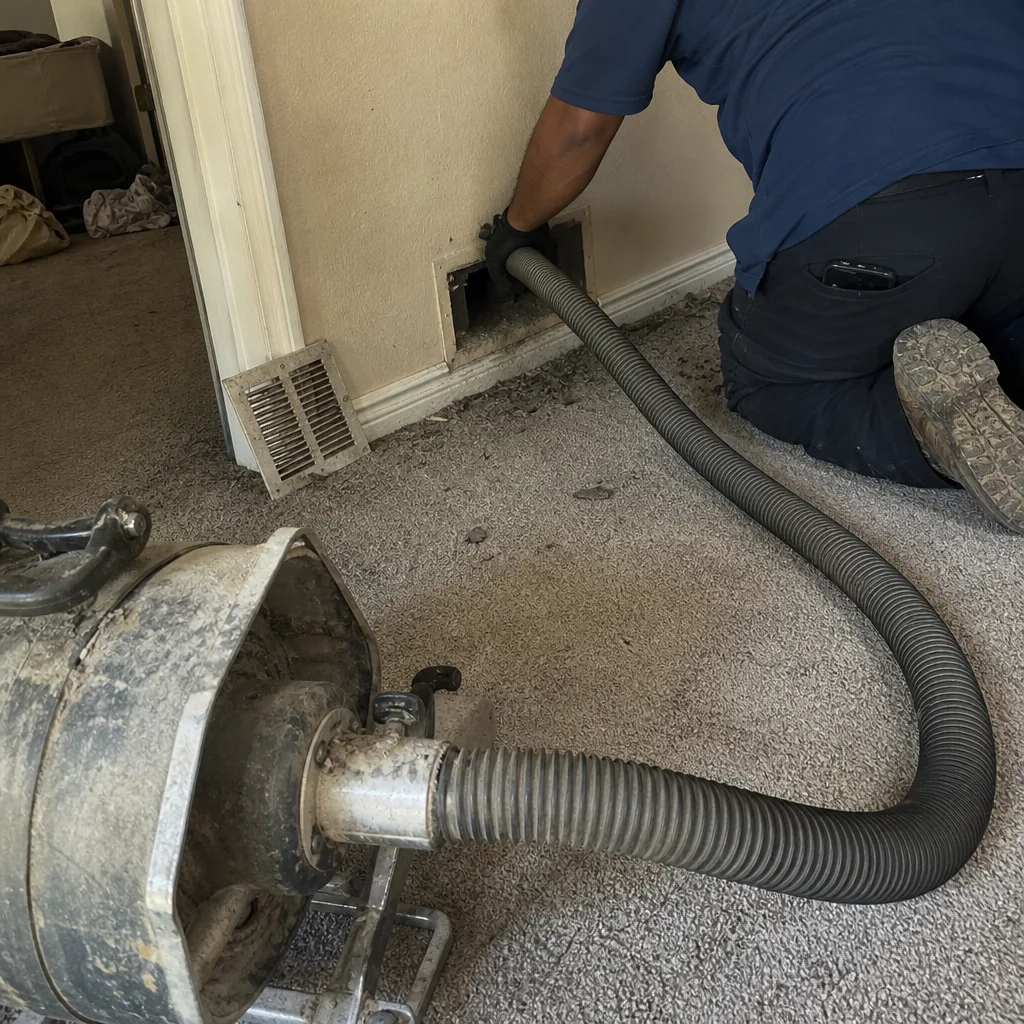
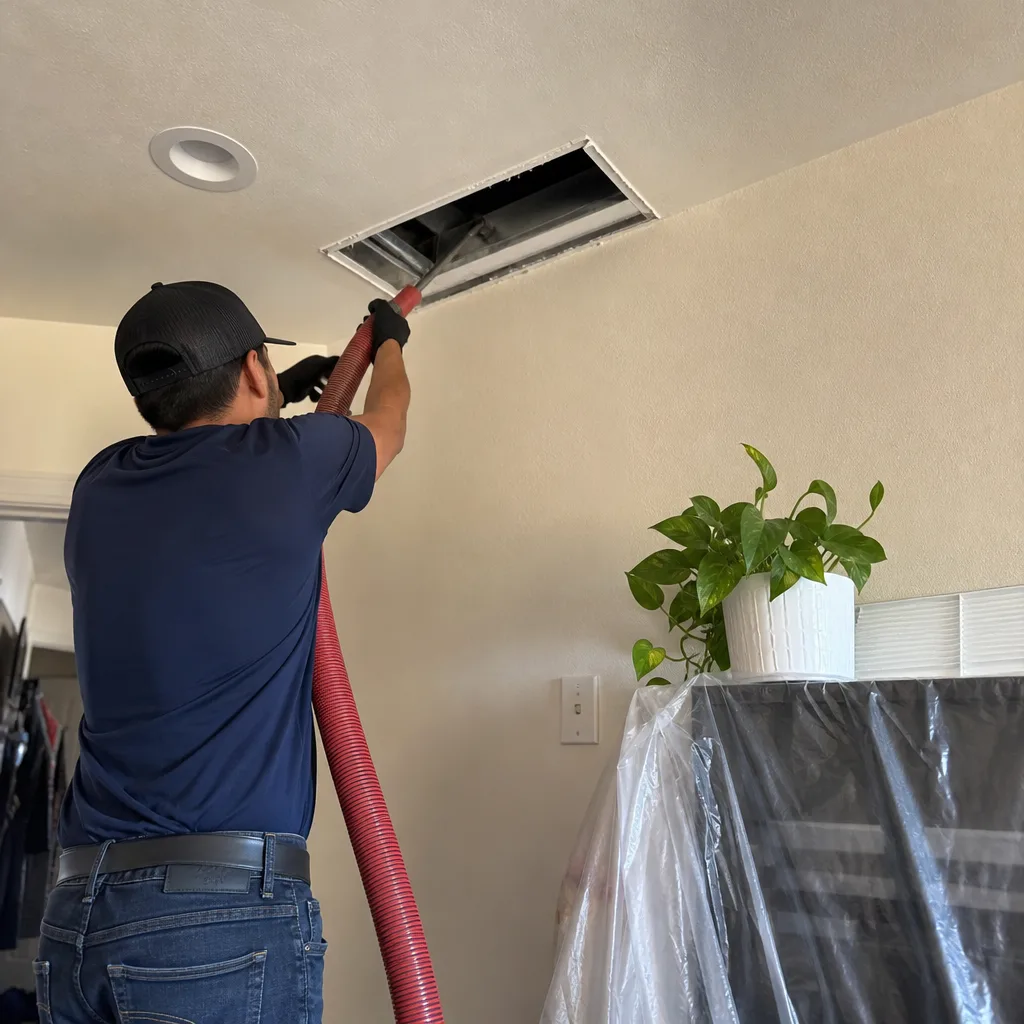
During a professional cleaning, a large vacuum unit connects to the duct system, typically at the main trunk line or plenum. This unit pulls air through the ducts continuously while agitation tools (rotary brushes, compressed air whips, or cable-driven scrubbers) break debris loose from the duct walls. The vacuum doesn’t just collect what the brush touches. It creates a directional airflow that carries loosened particles toward the vacuum inlet and into containment, rather than allowing them to drift backward into the living space.
Without negative pressure, every agitation action sends debris in the path of least resistance. That path is often out of the register openings and into the home. A DIY attempt with a shop vac at one register and a brush at another register is not creating a contained airflow path. It’s pushing debris around inside the duct system and, often, out into the rooms. The homeowner who tries to “clean” a duct this way can end up with more visible dust on furniture and floors than they started with, because they’ve loosened years of caked-on particulate and released it without capture.
Our technicians at Duct Cleaning San Jacinto home see this pattern regularly. A homeowner spends a Saturday attempting a duct cleaning, notices dust on everything by Sunday evening, and calls us Monday morning. The correction costs more than the original professional cleaning would have, because now the job includes cleaning the duct system plus the residence surfaces that received the fallout. The lesson isn’t that the homeowner was careless. It’s that the physics of containment are non-negotiable.
Negative pressure also affects verification. A professional cleaning with a Nikro HEPA-rated vacuum system captures debris at the point of agitation, which means the technician can show you what was removed. Without that capture, there’s no verification that anything was actually cleaned. You’re left guessing, and the guess is usually wrong.
When DIY Is Genuinely Appropriate, and When It’s Contradicted
The nuanced answer, and the one we give San Jacinto homeowners who ask us whether they should rent equipment or hire a professional, is that DIY duct cleaning has a legitimate but narrow window. Here’s the honest framework:
DIY is genuinely appropriate when:
- The home received a professional duct cleaning within the last 18 to 24 months, and the current need is surface maintenance, not deep cleaning.
- The task is limited to register washing, boot vacuuming, and filter replacement.
- The visible dust buildup is light and localized to a few registers near return air grilles (a normal pattern in any home).
- You’re doing a pre-listing spruce-up before putting a San Jacinto home on the market, and the ducts were professionally serviced recently enough that the system is fundamentally clean.
DIY is contraindicated in these specific scenarios:
- Post-construction or post-renovation dust: Drywall dust, sawdust, and insulation particles are fine enough to remain airborne for days and small enough to travel deep into duct runs. Without professional extraction, these particles will keep re-entering living spaces for months. Our company works with Abatement Technologies equipment for exactly this kind of contamination environment, where containment is the priority, not just volume.
- Visible mold growth or persistent musty odor: Mold requires remediation-level protocols, not just cleaning. Disturbing mold without proper containment spreads spores throughout the home. If you suspect mold in your ducts, do not attempt to clean them yourself.
- Rodent or pest debris: Droppings, nesting material, and carcass remnants are biohazards. They require professional removal with appropriate protective equipment and sanitization afterward. This is not a DIY situation under any circumstances.
- Collapsed or torn flex duct: In attics, flex duct can be crushed by stored boxes, damaged by animals, or simply degrade over time. Cleaning a torn duct with household equipment does nothing to fix the breach. This is an Air Duct Repair in San Jacinto situation, not a cleaning situation.
- Visible debris at registers that persists after cleaning: If you’ve cleaned registers and still see dark particulate blowing out when the system runs, the source is deeper in the ducts, where DIY tools can’t reach.
The San Jacinto-specific factors to weigh are heat and dust. This climate produces heavy particulate loading in HVAC systems, especially during summer when systems run continuously and draw in dry, dusty air from the surrounding valley. Ducts in this area accumulate more debris faster than ducts in coastal or more humid climates, which means the “18 to 24 months since last professional cleaning” window shrinks for homes here.
The Cost of Getting It Wrong: A Real ROI Calculation
The DIY vs. professional debate usually frames the question around savings: a professional duct cleaning costs more today than renting a tool and doing something yourself. But that framing ignores the cost-of-mistake, which is the real financial variable. Here’s the honest math for a San Jacinto homeowner:
| Approach | Upfront Cost | Realistic Outcome | Potential Downside Cost |
|---|---|---|---|
| Professional cleaning (Rotobrush/Nikro) | Market rate for whole-home duct cleaning | Full system cleaned, debris captured and removed, verification provided | None, assuming reputable contractor with proper equipment |
| DIY with household vacuum and light brushing | $25 – $50 in supplies | Surface-level cleaning of registers and boots only | Minimal, but no meaningful duct cleaning achieved |
| DIY attempted duct cleaning with rented shop vac or blower | $75 – $150 for rental day | Agitation without containment; debris redistributed into home | Full professional cleaning plus home surface remediation: significantly more than the original professional quote |
| DIY on a mold, pest, or post-construction situation | Variable, $50 – $200 in supplies | Contamination spread throughout duct system and living spaces | Professional remediation (potentially thousands), plus health exposure and extended downtime |
The scenario we see most often in San Jacinto is the third row. A homeowner reads a forum post, buys or rents a blower-driven cleaning kit, spends a weekend on it, and ends up with dust coating every horizontal surface in the house. The professional cleaning still needs to happen, and now the home also needs a thorough surface cleaning. The DIY “savings” turned into a net loss, plus a weekend of work.
There’s a second, quieter cost: failure to identify what’s actually wrong. A professional duct cleaning includes an inspection of the system. A technician who understands ductwork and HVAC systems can spot disconnected runs, crushed flex duct, missing insulation, rodent entry points, and improper filter fitment while working. A DIY attempt provides none of that diagnostic value, which means underlying problems go unaddressed until they cause bigger failures.
What the Rental Market Actually Offers, and What It Doesn’t
A persistent rumor in DIY forums is that you can rent professional-grade negative air machines or duct cleaning systems from Home Depot, Sunbelt, United Rentals, or similar outlets. Here’s what’s actually on the rental market, based on what’s available at major equipment rental locations that serve the San Jacinto area:
- Shop vacuums and portable vacuums: Available everywhere. These are not negative air machines. They generate some suction at the hose tip but do not create continuous directional airflow through a duct run. They are useful for cleaning the register boot, nothing deeper.
- Air scrubbers (small units): Some locations rent portable air scrubbers, typically 500 to 1,000 CFM units. These are designed to clean air in a room, not to pull air through ductwork. They can help with room-level dust, but they do not generate the sealed, in-duct negative pressure required for duct cleaning.
- Air compressors and hoses: Readily available. An air compressor alone, without a vacuum system, just sends high-pressure air into the duct and pushes debris out through registers into the home. This is the classic DIY mistake that makes things worse.
- No true duct cleaning systems: True duct cleaning systems, including professional-grade rotational brushing systems and high-CFM negative air machines, are not available through consumer rental outlets. These are commercial units that require specialized training to operate safely and effectively. Rental companies don’t stock them for the same reason they don’t rent commercial HVAC installation equipment: liability, training requirements, and equipment cost.
The gap between what’s rented and what’s needed is not a matter of brand loyalty. It’s a functional gap. A portable air scrubber in a room does not create the sealed negative pressure path that a professional duct cleaning requires. It’s the difference between a fan in the window and an actual HVAC system. Both move air. Only one does it in a controlled, directional, contained way.
Home Depot’s duct cleaning tool rental, where available, is typically limited to small hand tools and brush kits. Sunbelt and United Rentals serve the commercial contractor market for jobsite air scrubbers and ventilation, not residential duct cleaning. The equipment that matters, like the Rotobrush rotary brush system or a Nikro HEPA-rated vacuum, is professionally owned precisely because it’s the core differentiation between a contractor who cleans systems and a generalist who moves dust around.
What Professional Equipment Does That Rentals Can’t
Let’s be specific about the equipment gap, because this is where the honest comparison lives. A professional duct cleaning in San Jacinto using the right tools accomplishes three things no DIY setup can replicate:
1. Mechanical agitation with simultaneous containment. A Rotobrush rotary brush system reaches deep into duct runs with a motorized rotating brush that scrubs the interior walls while a connected vacuum system simultaneously captures loosened debris. The agitation and capture happen in the same moment, which is what prevents redistribution. No rented tool does this because no rented tool creates the required airflow while agitating.
2. HEPA-level capture of sub-micron particles. A Nikro HEPA-rated vacuum system filters the exhausted air to HEPA standards, meaning particles as small as 0.3 microns are captured. A shop vac regardless of its filter does not achieve this. The distinction matters for San Jacinto homes where fine dust from the surrounding valley, pet dander, and pollen are the primary contaminants. These are sub-micron particles that pass through standard vacuum filters and re-enter the air.
3. System-level integration awareness. Professional technicians working in the homes we serve understand how the duct system connects to the HVAC unit, to the filtration system, and to whole-home air quality platforms. A home with a Honeywell or Aprilaire system has a different service profile than a home with a standard filter rack. Our crews see the full system, not just the ducts. That’s the definition of air duct cleaning in San Jacinto done the way HVAC professionals do it.
For higher-contamination environments where mold or post-construction dust is present, Abatement Technologies equipment adds a containment layer that consumer gear cannot approximate. These are the situations where a homeowner should absolutely not attempt the work themselves, because disturbing those contaminants without proper containment is a health risk to everyone in the home.
San Jacinto Climate Considerations and Duct System Stress
San Jacinto’s climate affects duct systems in ways that don’t apply to homes in other parts of Southern California. Understanding these factors helps explain why duct cleaning matters more here than in milder climates, and why DIY approaches fall short in this environment specifically:
Heat-driven continuous operation: Summer temperatures in the San Jacinto Valley routinely exceed 100 degrees, pushing HVAC systems to run 10 to 16 hours daily for months. This continuous operation means air moves through ducts constantly, carrying whatever particulate is in the airstream. Dust accumulates faster in ducts that run continuously than in ducts that cycle on and off. The duct walls in a San Jacinto home see more air movement in a single summer than some coastal homes see in three years.
Dry, fine-particulate dust: The valley’s semi-arid climate produces a specific type of dust: fine, light, and easily airborne. This particulate doesn’t settle out of the airstream quickly; it stays suspended and travels deep into duct runs. It also passes through standard filtration more readily, which means it accumulates on duct walls, coils, and blower components. This is the dust that a homeowner’s vacuum cannot reach and that requires professional extraction with proper containment.
Flex duct in hot attics: Most San Jacinto homes route ductwork through attics, where summer temperatures can reach 140 degrees or higher. Flex duct in those conditions degrades faster than in cooler climates. Liners separate, insulation compresses, and connections loosen. What looks like a dirty duct problem is sometimes a damaged duct problem, which is why we always inspect during cleaning and can address Air Duct Repair in San Jacinto when we find it.
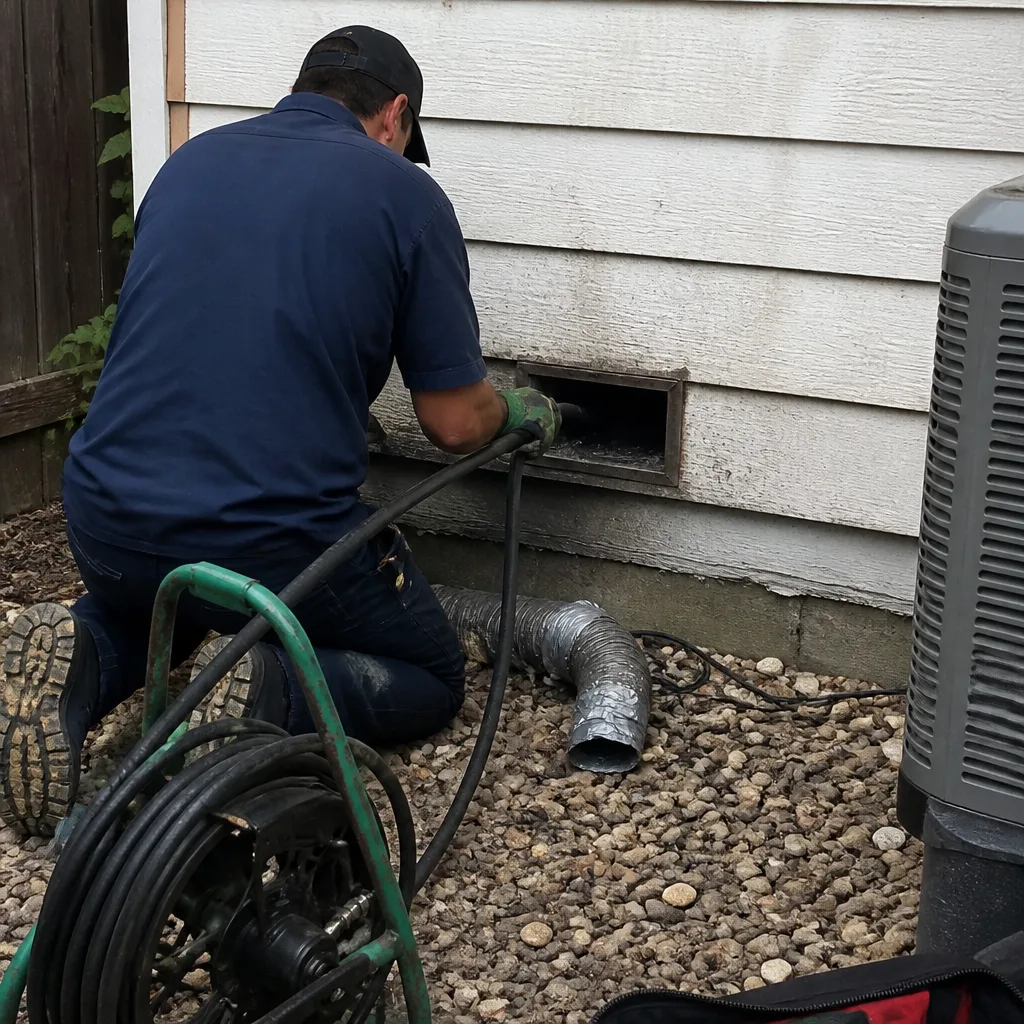
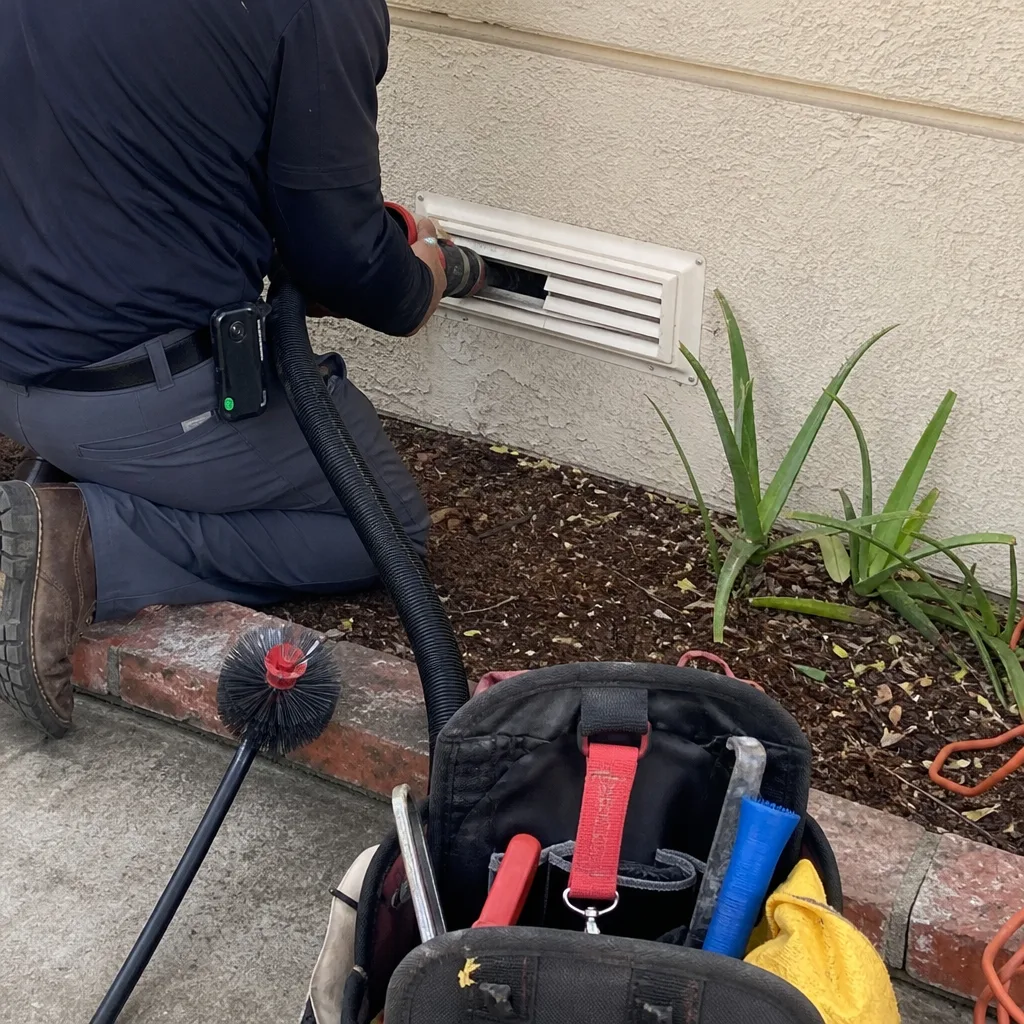
Dryer vent fire risk compounded by climate: Dryer vents in dry climates accumulate lint that is already unusually dry, making it more combustible than lint in more humid regions. A homeowner who brushes out the first few feet of the vent is doing useful maintenance. But the stretch of duct behind the wall or above the ceiling, where lint accumulates at bends and junctions, requires professional Dryer Vent Cleaning in San Jacinto. The fire risk in a climate like this one is not theoretical. It’s a material property of the debris and the environment.
Common Mistakes to Avoid
- Using a leaf blower to “blow out” ducts: A leaf blower produces high-volume, high-pressure air with no capture. Everything it loosens comes out of registers into the home. We’ve seen this attempted in San Jacinto homes and the result is always a bigger mess than the original problem.
- Buying an “As Seen on TV” duct cleaning kit and expecting professional results: These kits typically include a small brush and a flexible rod. They can’t agitate duct walls effectively, and they provide zero capture. Using them often loosens debris without removing it, the worst of both worlds.
- Using a shop vac at one register while the system is running: Running the HVAC fan while vacuuming a register creates positive pressure that pushes debris out of other registers. This actively redistributes dust throughout the home. Turn the system off before any register-level cleaning.
- Poking tools into ductwork without understanding what’s inside: Duct runs contain dampers, turning vanes, and connections that can be damaged by improvised tools. A broken damper or separated connection is an expensive repair that didn’t need to happen. Duct interiors are not empty pipes; they’re part of an engineered system.
- Ignoring the return side of the system: Many DIY-minded homeowners focus on supply registers, but the return side typically accumulates more debris, since that’s where unfiltered air enters the ductwork. If you’re doing any surface maintenance, clean return air grilles first and check filters on the return side.
- Proceeding without checking the duct system for existing damage: Torn flex duct, disconnected boots, or rodent damage create pathways where your cleaning efforts simply blow debris into the attic or wall cavity. A broken duct can’t be cleaned; it has to be repaired first.
- Assuming a musty smell is just “old dust”: Persistent musty odor from registers often indicates moisture in the duct system, which means mold potential, a condensation problem, or a leak. These are inspection and correction issues, not cleaning issues. Disturbing them without professional protocols can make a bad situation worse.
When to Call a Professional
Call a professional when any of these conditions exist: visible dust blowing from registers when the system runs, persistent musty or unusual odors from the ductwork, recent construction or renovation dust, signs of rodent or pest activity in ducts, unexplained increases in allergy symptoms or respiratory irritation in the home, or ducts that haven’t been professionally cleaned in three or more years in a San Jacinto home that runs the AC heavily. Also call if you’ve already attempted a DIY cleaning and now see dust on surfaces throughout the home, which means agitation without capture has occurred and a professional extraction is now necessary.
Duct Cleaning San Jacinto offers free estimates in San Jacinto. Our technicians use Rotobrush and Nikro equipment on every cleaning job. Call (866) 569-6948 to schedule an inspection or get a quote.
Frequently Asked Questions
Professional air duct cleaning in San Jacinto typically ranges from $350 to $750 for a whole-home system, depending on home size, number of registers, accessibility of ductwork, and contamination level. Homes with two systems or extensive flex duct runs fall toward the upper end. Call (866) 569-6948 for an exact quote for your home. Estimates are free.
A shop vac can clean the first 6 to 12 inches of a register boot, but it cannot clean the duct run behind the boot because it lacks the reach and, more importantly, the negative pressure to contain debris while agitating duct interiors. Attempting deeper cleaning with a shop vac typically loosens debris that then exits through other registers into the home.
Some companies quote low prices to get a technician in the door, then use per-vent upsell pricing that multiplies the final invoice. A reputable contractor quotes one flat price for the whole system before work starts. If a quote seems unusually low, ask what equipment the company uses, whether the price covers the entire system, and whether the technician will show before-and-after photos of your actual ducts.
Ask for visual proof. A professional using proper equipment can show before-and-after photos or video of the duct interiors taken during the job. If a company can’t provide visual verification of their work, you don’t actually know what was cleaned. This is one reason the equipment matters: a Rotobrush system with camera capability provides verification that improvised tools can’t.
In San Jacinto’s hot, dusty climate, most homes benefit from professional duct cleaning every 3 to 5 years. Homes with pets, recent renovation history, smokers, or family members with allergies or respiratory conditions may need cleaning more frequently. If you’ve never had your ducts cleaned and your home is more than 10 years old, schedule an inspection first to determine actual condition. Call (866) 569-6948 for a free estimate.
Yes. Dryer vent cleaning addresses the dedicated exhaust duct from your dryer to the exterior of the home, which accumulates highly combustible lint and is a fire safety concern. Air duct cleaning addresses the HVAC distribution system that delivers conditioned air throughout the home. The two systems are separate, require different equipment, and should be serviced by a company that treats both as dedicated services, not afterthoughts. We offer Dryer Vent Cleaning in San Jacinto as a distinct service line for this reason.
The Bottom Line
The DIY vs. professional duct cleaning question resolves to one technical fact: without negative pressure, cleaning ductwork is not possible. What’s possible is surface maintenance, which has real value but doesn’t clean the system. San Jacinto homes face heavier duct loading than most due to climate, which means the eventual need for professional cleaning arrives sooner, not later. A homeowner can wash registers, vacuum boots, clean the first feet of a dryer vent, and maintain filters. That’s the DIY ceiling. Beyond it, professional equipment from Rotobrush and Nikro, containment capability from Abatement Technologies, and the diagnostic skill to identify system problems make professional cleaning the cost-effective choice, especially when measured against the cost of correcting a DIY attempt gone wrong.
If you’re in the San Jacinto area and want an honest assessment of what your ducts actually need, call (866) 569-6948. We’ll inspect your system, show you what we find, and give you a clear quote. No per-vent surprises, no bait-and-switch, just one flat price for the whole system agreed before work starts.
Written by the team at Duct Cleaning San Jacinto, serving San Jacinto since 2015.
See the difference
 Before
 After
 Before
 After
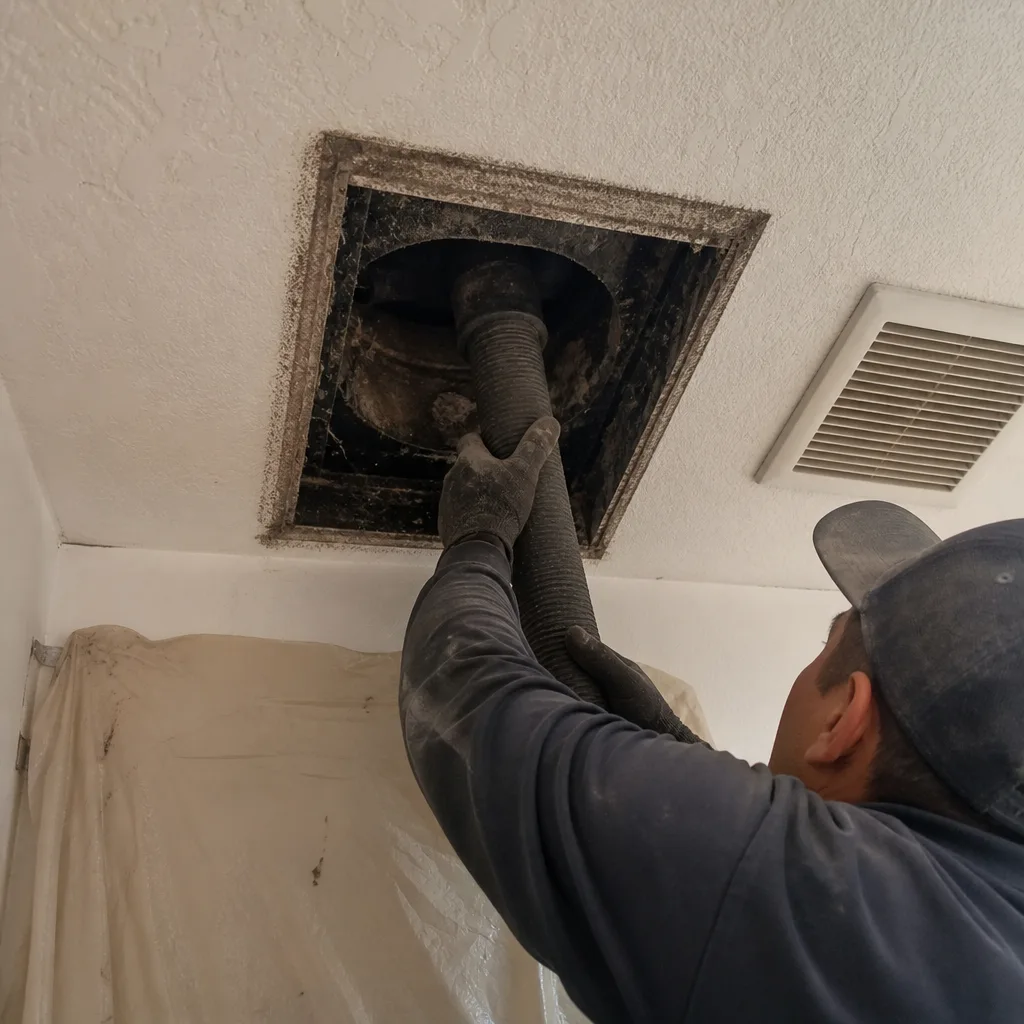 Before
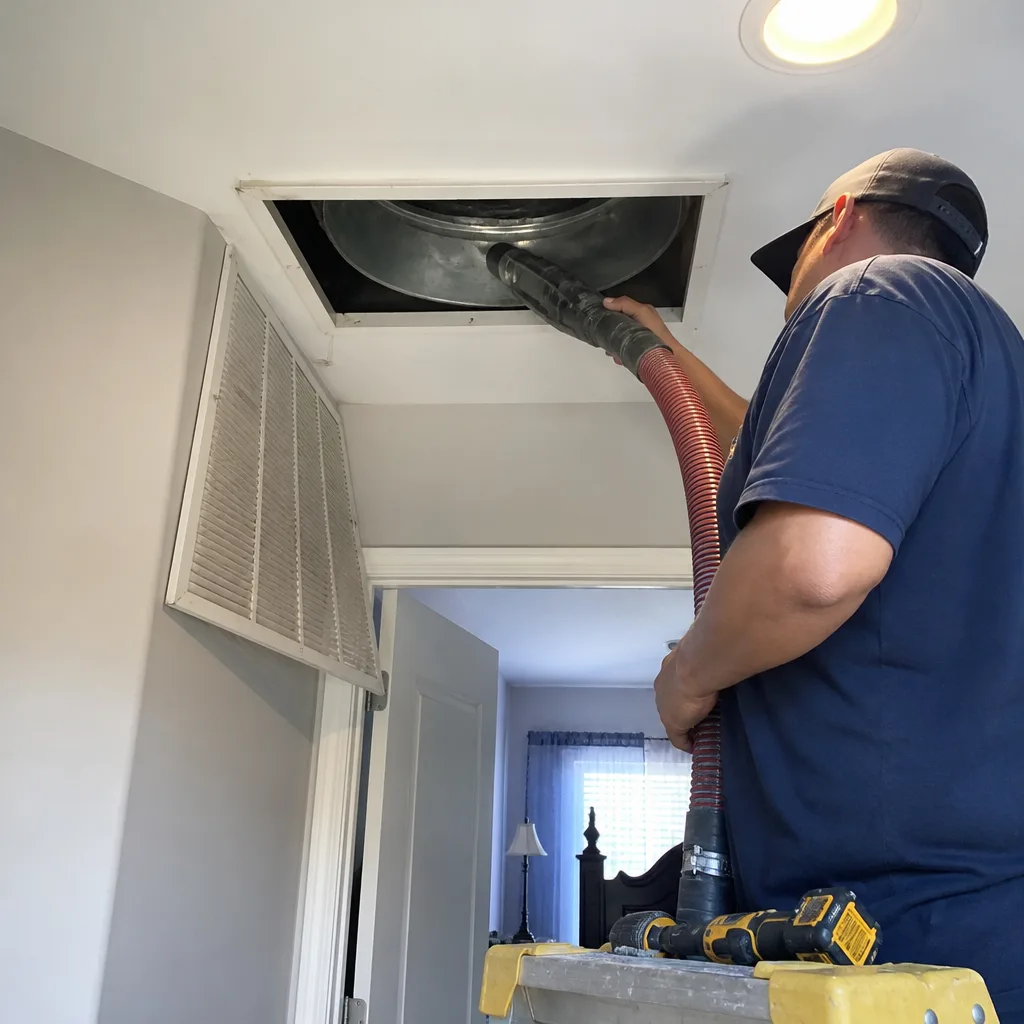 After